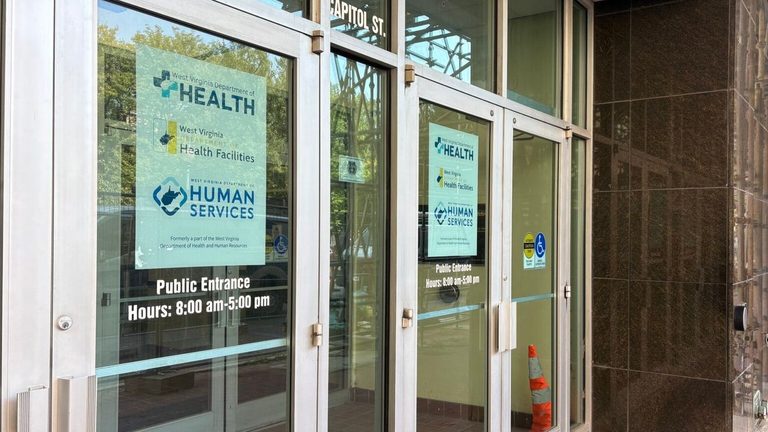
West Virginia’s Department of Human Services is confronting a costly reality: the online benefits platform known as PATH (People’s Access to Help) may require as much as $948 million to replace. The figure comes from bids submitted by three firms—Deloitte, Infosys Public Services and current operator Optum—who are competing for a new contract after a decade‑long partnership with the Minnesota‑based health‑technology company.
Current spending and contract details
Since the system’s launch in 2024, the state has already poured $332.9 million of federal and state dollars into PATH. Under the existing agreement, West Virginia must still pay roughly $36 million to keep the platform running through 2027, with about $26.6 million of that amount covered by federal funds and $10.1 million coming from the state budget. An additional $4.25 million is earmarked for approved changes or improvements.
Lawmakers raise alarm over cost and performance
House Health Committee Chair Evan Worrell (R‑Cabell) called the projected replacement cost “very, very concerning,” noting that the numbers reflect a ten‑year contract horizon. State Senator Eric Tarr (R‑Putnam) likened the situation to “paying an awful lot of money for a car we’ve never really got to drive,” emphasizing that West Virginia families depend on PATH for critical assistance.
Both legislators stressed the impact on children and vulnerable residents. “We owe it to the children of West Virginia to get this right,” Worrell said, adding that the system’s failures affect every agency, legislator and citizen who relies on timely benefit delivery.
Calls for a shorter, more accountable contract
Worrell and Tarr argue that a three‑year funding window would allow a new vendor to prove its ability to fix the platform before committing to longer‑term spending. Worrell suggested supporting funding for the next three years to let a vendor demonstrate success, with subsequent appropriations contingent on performance.
Concerns were also raised about the limited number of bidders. Only two firms besides Optum submitted proposals, prompting worries that the project’s complexity may be deterring competition. “I’m scared that it’s become so bad that vendors are hesitant to bid,” Worrell warned.
Transition planning and potential savings
Senator Tarr asked whether PATH would assist in a smooth handoff to a new contractor, emphasizing the need for a “warm handoff” to avoid service interruptions for families applying for Medicaid, SNAP and foster‑care benefits.
An audit ordered by Governor Patrick Morrisey earlier this year identified $18.5 million in potential savings by addressing technology constraints and mainframe dependencies tied to PATH. State officials hope that a fresh contract, coupled with tighter oversight, can capture those efficiencies.
What’s at stake for West Virginians
PATH is the primary portal through which residents apply for Medicaid, SNAP, low‑income assistance and foster‑care services. When the system falters, payments to vendors and providers are delayed, directly affecting the delivery of care to children and families in need.
State Department of Human Services communications specialist Angelica Hightower reiterated that most operating costs are federally funded, but stressed the importance of state stewardship to ensure the platform remains functional while a new vendor is selected.
Looking ahead
The bidding process is still under review, and state procurement rules prohibit public discussion of the proposals until an award is made. Lawmakers and agency leaders alike agree that swift, transparent action is essential to protect West Virginia’s safety‑net programs and to safeguard taxpayer dollars.
As the debate continues, the focus remains on delivering a reliable, cost‑effective system that serves the children and families who depend on it every day.
Original reporting: WCHS Eyewitness News Charleston (local) — read the source article.