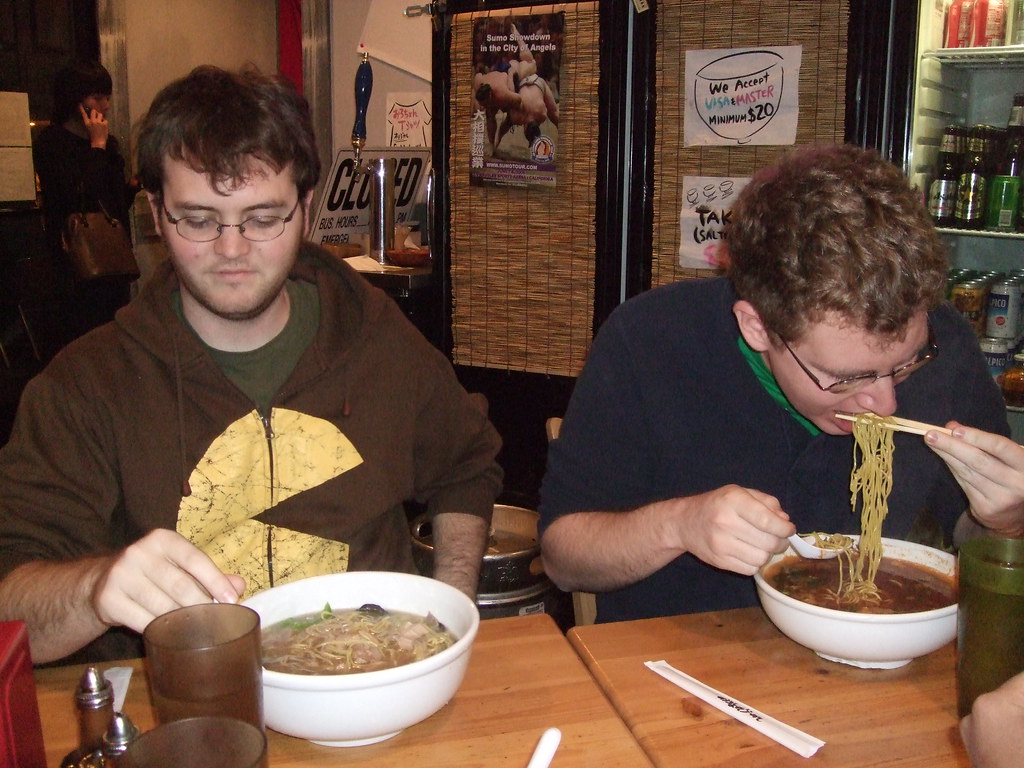
What exactly does it mean when a ramen shop hangs a wall of shame at the register? At Orochon Ramen in Little Tokyo, it means exactly what you think: someone ordered the Special No. 2 — the spiciest bowl on the menu — finished it in under thirty minutes, and earned the right to have their photo immortalized in a laminated grid of sweaty, red-faced triumph. The wall has been filling up since the mid-2000s. This is not a gimmick. It is, improbably, a organizing principle.
Orochon sits on a corner of East 2nd Street in Little Tokyo, which is to say it sits in a neighborhood that could eat very well on its own if the rest of the city ceased to exist. The room is small, counter-style seating along one wall, tables along the other, fluorescent and no-nonsense. There is typically a line. It moves. If you show up at noon on a Saturday and expect to walk right in, you have misread the situation.
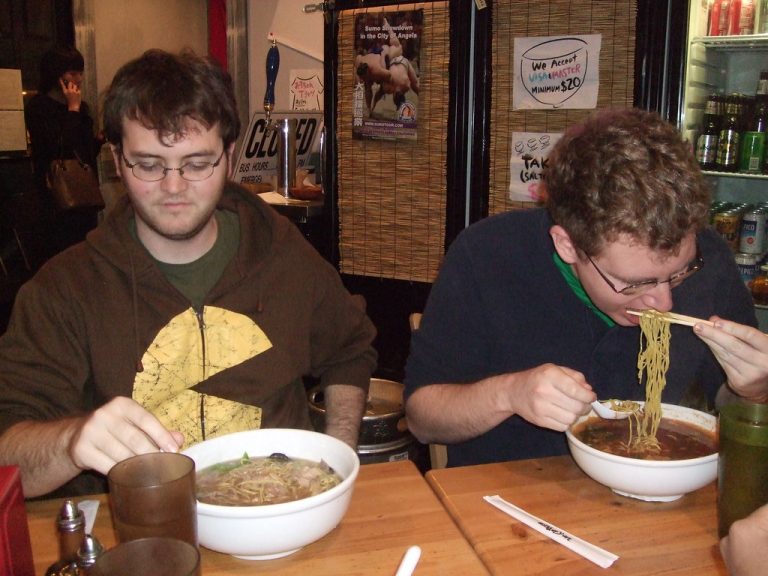
The ramen itself is the reason people keep coming back year after year. The broth is tonkotsu-based — milky, rich, the kind of thing that takes real time to make properly — and you choose your spice level on a numerical scale from one (mild and savory) up to seven, which requires a signed waiver, and the aforementioned Special No. 2, which is off the printed scale in a category of its own. Most regulars stay between three and five. Fours are genuinely spicy; fives require a commitment. The noodles are firm, the chashu pork is fatty in the right places, and a soft-boiled egg, ordered as an add-on, is worth the extra dollar fifty.
Prices are reasonable by any standard — a bowl lands somewhere between thirteen and seventeen dollars depending on what you add — which partly explains why the place draws an eclectic crowd: office workers from downtown, students from USC and UCLA making a special trip, tourists who stumbled out of the Japanese American National Museum two blocks away, and old-timers who have been ordering the same bowl since the Bush administration.
Service is quick and direct, which some people interpret as cold and others interpret as respectful of their time. The staff have seen a lot. They are not going to perform enthusiasm at you. The water glasses get refilled without asking. The order comes out fast. You eat, you pay, you leave. The whole thing takes maybe forty minutes if you are not dawdling, which feels like the right pace for the neighborhood.
Little Tokyo itself is worth the visit even if you end up at a completely different restaurant, but Orochon has staying power that trendy spots nearby don’t always manage. It opened in 2004 and has not substantially changed, which in Los Angeles is practically a museum-quality achievement. The challenge wall keeps growing. The broth stays the same. Some institutions earn that word.
Go on a weekday lunch if you want breathing room. Go on a weekend if you don’t mind the line and want the full experience of watching a table of four negotiate who is brave enough to order the Special. Someone always is. They almost never finish it clean.