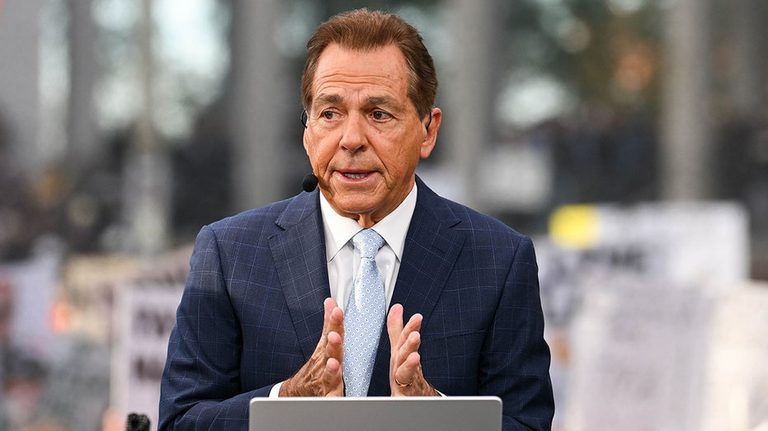
Alabama head coach Nick Saban, widely regarded as one of college football’s most successful leaders, recently challenged the long‑standing perception that the SEC is automatically the premier conference because of its championship wins. Speaking on “The Pat McAfee Show,” Saban argued that a single national title does not demonstrate the overall strength of a league from top to bottom.
Saban’s remarks on conference strength
“Just because you win a national championship does not make and evaluate the level of your league,” Saban said. “It means you had a really good team that was better than everybody else, but it doesn’t mean you necessarily had the best league from top to bottom. My argument with the SEC has always been the strength of the league, from top to bottom. I think that’s very clear this year.”
Historical context of SEC dominance
During Saban’s tenure, Alabama captured six national titles, and the SEC secured a total of six championships from 2013 onward. Critics have often pointed to those victories as evidence that the SEC is superior to other Power Five conferences. However, Saban’s comments suggest a shift in narrative, emphasizing depth rather than singular success.
Data on conference depth
When the final AP poll after the 2015 season is examined, Alabama finished No. 1, while the next highest‑ranked SEC team, Ole Miss, was No. 10. Only two SEC teams appeared in the top‑15, whereas the Big Ten placed four teams, the ACC three, and the Big 12 three. Similar patterns emerged in 2016 and 2017, with the SEC fielding fewer top‑15 teams than the Big Ten and other conferences.
More recent analytical tools, such as ESPN’s SP+ efficiency rankings, show a different picture. The latest SP+ top‑25 includes five SEC teams, six Big Ten teams, and seven Big 12 teams. Expanding to the top‑35, the Big Ten holds eleven spots compared with eight for the SEC. These metrics suggest that, at least by opponent‑adjusted efficiency, the Big Ten and Big 12 currently possess greater depth.
Implications for the College Football Playoff
The College Football Playoff selection committee has faced criticism for perceived bias toward the SEC, especially when the conference’s champion receives a high seed despite limited overall depth. Saban’s statements highlight the tension between rewarding a single dominant team and recognizing broader conference strength.
Last season’s bowl results further illustrate the debate. SEC teams went 0‑3 against other Power Four conferences in the playoff and posted a 1‑8 record in bowl games, while Alabama suffered a 38‑3 loss to Indiana in the Rose Bowl after receiving a playoff berth.
What this means for fans and the future
For supporters of the SEC, Saban’s comments may feel like a concession that the conference’s reputation rests heavily on Alabama’s success. For fans of other conferences, the remarks provide validation that depth and overall competitiveness matter in evaluating league strength.
As the 2026 season unfolds, the conversation will likely continue. If the SEC can field multiple high‑performing teams and secure another championship, the depth argument may be revisited. Until then, Saban’s perspective adds a nuanced voice to the ongoing discussion about fairness, merit, and the true meaning of conference superiority in college football.
Original reporting: Fox News (HLL/CB) — read the source article.