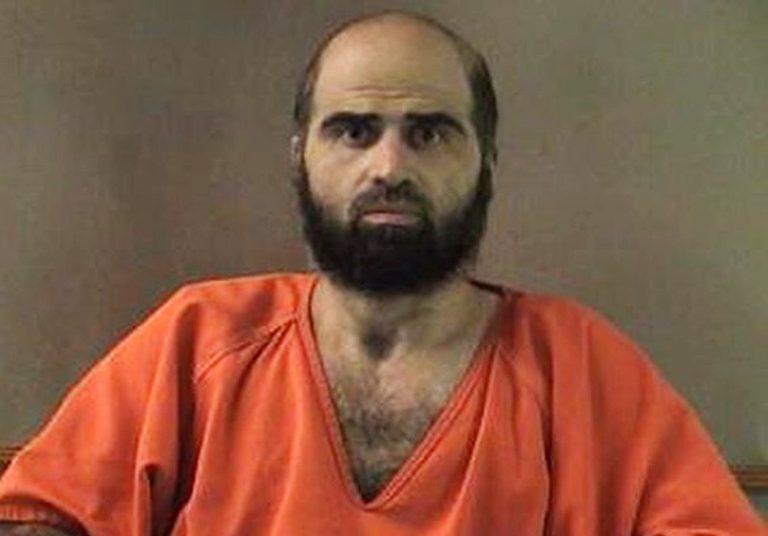
KILLEEN, Texas – Survivors of the 2009 Fort Hood mass shooting gathered Wednesday for an update on the pending execution of former Army major Nidal Hasan. The court did not rule on Hasan’s request to delay or stay his Dec. 3 execution, and a new hearing is scheduled for Monday.
Victims’ reactions
Alonzo Lunsford, the soldier wounded by Hasan, and Julia Wilson, a civilian employee at the Soldier Readiness Processing Center, told News 10 they were not surprised by the filing and expressed strong feelings about the process. Lunsford said he is mentally prepared to travel to the execution site, adding, “I knew this guy. I had worked with this guy two weeks prior.” Wilson, who was not physically injured, said the filing could open the door for a re‑classification of the attack as a terrorist act, noting, “They’ve never officially declared him an enemy of the state.” She also lamented the lack of benefits for non‑injured survivors, calling the situation “a slap in the face.”
Hasan’s legal maneuver
On Nov. 24, Hasan asked the U.S. District Court for the District of Kansas to stay his execution by firing squad, citing a pending federal habeas corpus petition that challenges his conviction and death sentence as violations of constitutional and statutory rights. The filing lists early claims and indicates additional arguments may be added once the petition is completed.
Hasan alleges the military judge at his 2013 court‑martial denied him due process by refusing to consider a defense that the Fort Hood shooting was a justified act of defending the Taliban against U.S. forces. He also claims President Donald Trump and Secretary of War Pete Hegseth unlawfully influenced the military‑justice process because of alleged racial and religious hostility.
Administration’s stance
The Trump administration maintains that the execution order follows established law and proper authority. The President’s office has repeatedly affirmed that the decision to use a firing squad rests with the Secretary of the Army, a position the administration says has been duly exercised. While Hasan argues that Acting Army Secretary Adam Telle has not been confirmed by the Senate, the administration points out that the Secretary’s authority to approve execution methods is not contingent on Senate confirmation.
Legal representation
Hasan says he intends to represent himself in the federal proceedings, with standby counsel from the ACLU’s Capital Punishment Project and the Fourth Circuit’s Capital Habeas Unit. No comment was received from the Department of Justice regarding the pending hearing.
What’s next?
The court has set a follow‑up hearing for Monday, giving both sides another opportunity to present arguments. Victims and their families said they hope the request will be denied and that the execution will proceed as scheduled, even as they acknowledge the process feels rushed.
“If it doesn’t go through, he still has to go back, wheel his happy little self back to that cell and solitary confinement,” Lunsford said, underscoring the survivors’ desire for closure.
Background
Hasan was convicted of killing 13 people and wounding 32 others during the Fort Hood shooting on Nov. 5, 2009. The execution by firing squad was announced last month, marking the first use of this method in the United States since 2010. The case continues to draw national attention as it intersects with ongoing debates over capital punishment, military justice, and the role of the executive branch in overseeing executions.
Original reporting: KLTV 7 Tyler (news) — read the source article.