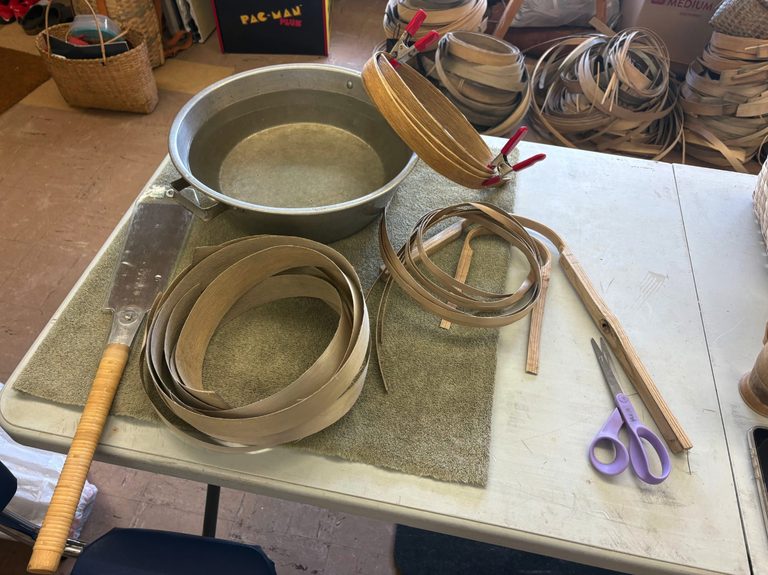
In a sun‑lit studio on the shores of Lake Superior, Bad River Band artisan April Stone of Ashland, Wisconsin, reflects on a changing landscape. The emerald ash borer, an invasive beetle first detected near Detroit in 2002, has spread to all 72 Wisconsin counties and 37 other states, killing the black ash trees that have long been the backbone of her basket‑weaving craft.
From ash to new materials
Stone, a full‑time basket maker, has spent decades harvesting ash splint—thin strips of wood peeled from the tree’s trunk—to create the sturdy, dark‑colored baskets prized by her community. “I remember watching on the news that Menards had received a shipment of firewood from an area that had been quarantined from the emerald ash borer,” she recalls.
With ash disappearing, Stone has begun to honor other native plants. “It’s also made me appreciate and honor other beings: the grapevines, the cedar, the cattail, the basswood,” she says. “Things change, so I have to adapt too.” Her studio now features a “nest” of ash splint piled high, a visual reminder of what has been lost and a teaching tool for her students.
Ecological impact and cultural response
Black ash is a keystone species in the Northwoods. Its roots help regulate groundwater, reducing swamping and runoff that can damage other vital plants such as wild rice (manoomin). Plant‑pathology doctoral candidate Colin Peters of the University of Minnesota warns that losing ash can alter erosion rates in riparian and swamp areas, affecting the broader ecosystem.
Across the border in Michigan’s Upper Peninsula, Lac Vieux Desert Band cultural coordinator Richard Siewertsen surveys dying ash stands in the Ottawa National Forest. He uses the wood to craft traditional lacrosse sticks, prized for their light weight and strength. “People are talking about switching to sugar maples, but then you’re cutting into a different resource too,” he notes, underscoring the delicate balance between cultural practice and forest stewardship.
Balancing tradition, stewardship, and education
The U.S. Forest Service’s current prescription for the beetle is to leave infested trees standing, avoiding large‑scale cutting or commercial sale. Yet the agency permits limited harvest for cultural uses, allowing artisans like Siewertsen to continue their craft while the forest recovers.
Both Stone and Siewertsen see the beetle as a teacher. Siewertsen incorporates the distinctive D‑shaped exit holes left by the insect into lacrosse sticks, using them as educational tools for youth learning the game and the environment’s interconnectedness.
Finding balance through humility
Stone’s reflection turns to Ojibwe spirituality. “The Ojibwe word for insect is manidoons, meaning ‘little spirit.’” She explains that initially she felt anger, but later recognized the beetle’s role as a messenger. “Maybe we live more minimally, more in balance,” she says, noting that the baskets now tell a new story for future generations.
For the Indigenous communities of northern Wisconsin and the Upper Peninsula, the emerald ash borer is more than a pest; it is a catalyst for cultural adaptation, ecological awareness, and a renewed commitment to living in harmony with the land.
Original reporting: Wisconsin Watch — read the source article.