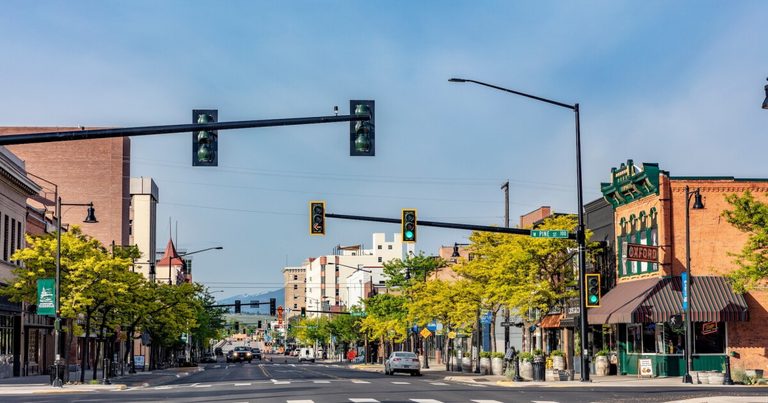
In a mid‑November vote, the Missoula City Council approved an update to the city’s Complete Streets policy, a move designed to improve safety and accessibility for residents of all ages and abilities. The policy revision, announced by the council, emphasizes a network‑wide approach that prioritizes underinvested and underserved neighborhoods, according to ypradio.org.
Jackie Semmens, Montana and Wyoming state government relations director for the American Heart Association, explained that the changes will help people throughout Missoula who walk, bike, roll, use transit or drive. “We know physical activity is a huge part of heart health and when people live in safe neighborhoods, it’s easier for them to get outside, to be active, and to make physical activity a part of their everyday lives,” Semmens said.
The updated policy aligns with the goals of the National Complete Streets Coalition, which advocates for safety‑first street planning, design and maintenance. Typical improvements under the coalition’s guidance include connected sidewalks, clearly marked pedestrian crossings and easier access to public transportation. Missoula has participated in the coalition’s program since 2009 and earned a perfect score for its 2016 policy, ypradio.org reported.
Semmens highlighted that more connected, walkable neighborhoods can help residents safely reach essential destinations such as schools, workplaces and medical facilities. She added that as Montana communities grow and housing prices rise, thoughtful transportation planning can attract investment to historically under‑resourced areas. “Taking the step to prioritize low‑income neighborhoods can help address some of those changes that we’re seeing in cities by making sure it’s not just nice neighborhoods get nicer, but making sure that the city thoughtfully views the whole transportation network as a connected network,” she emphasized.
Other Montana cities—including Helena, Bozeman, Billings and Kalispell—have also adopted Complete Streets policies, creating a regional momentum toward safer streets. The American Heart Association is working with these municipalities to encourage broader adoption of similar strategies, Semmens noted.
Missoula residents can expect the updated policy to guide future street projects, from sidewalk extensions to new bike lanes and improved transit stops. The council’s decision reflects a growing recognition that transportation design directly influences public health outcomes and community equity.
What’s next: The city will begin implementing the revised guidelines in upcoming infrastructure projects, with the first set of improvements slated for the next construction cycle. Community members are encouraged to attend future public planning sessions to provide input on specific street redesigns.
Sources: ypradio.org