Seoul’s latest cabinet reshuffle, unveiled on Monday, is being framed as a decisive step toward restoring a robust partnership with the United States under President Trump. The changes come after a series of high‑profile dismissals that critics said reflected growing friction between the two allies.
Key departures and the push for a strategic alliance
Among the officials removed were Foreign Minister Cho Hyun, Unification Minister Chung Dong‑young, and National Intelligence Service (NIS) Director Lee Jong‑seok. Chung, long‑standing advocate for engagement with North Korea, fell out of favor after a March parliamentary hearing in which he referenced a North Korean uranium enrichment site at Kusong – a detail U.S. officials deemed classified. Chung defended his remarks, insisting the information was already public.
Lee Jong‑seok’s exit is linked to concerns over alleged intelligence leaks that prompted Washington to bar Seoul from a June briefing with Japan on North Korean cyber threats. While the NIS has not disputed the reports, the episode underscored Washington’s frustration with perceived security lapses.
President Lee’s rationale
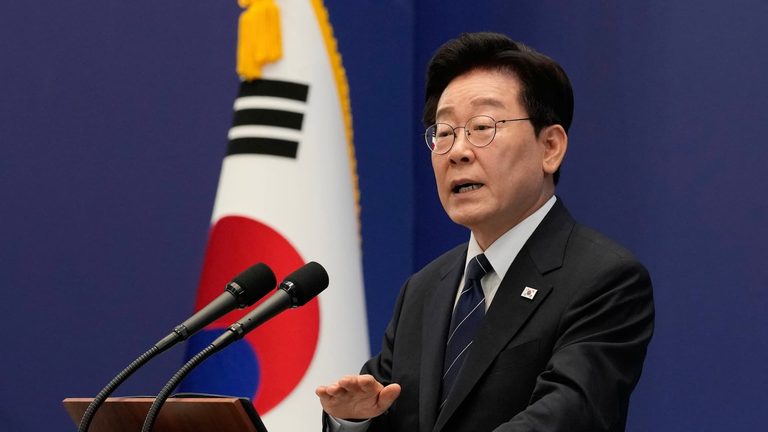
President Lee Jae‑myung told reporters the reshuffle was intended to “maximize national interests” and to position South Korea for a “breakthrough with Washington.” He emphasized a desire to evolve the bilateral relationship into a “strategic alliance that encompasses cooperation in advanced industries and economic security.”
Opposition lawmaker Kim Dai‑sik (People Power Party) seized on the moves, calling the reshuffle an admission that the alliance was “not being well managed.” Yet the ruling Democratic Party of Korea framed the changes as a necessary correction to restore trust.
Economic ties under pressure
Trade and investment have become flashpoints. In late 2025, South Korea pledged $350 billion in U.S. investments to avoid a 15 percent tariff on its exports – a concession short of President Trump’s earlier threat of a 25 percent levy. The two nations also selected a $22.3 billion gas‑fired power plant project in Texas, dubbed “Project Star,” as a flagship joint venture.
President Trump, however, has expressed impatience with the pace of these investments and has signaled support for South Korean participation in Alaskan energy projects – a proposal that has raised eyebrows in Seoul. Washington’s backing of Coupang, a U.S.-listed e‑commerce firm under investigation in South Korea, further illustrates the complex commercial backdrop.
Security and defense concerns
Defense cooperation remains a sticking point. A 2025 agreement approved by President Trump to provide South Korea with nuclear‑submarine technology and fuel has stalled, and Seoul’s push to place its troops under sovereign command rather than U.S. wartime control has met resistance from retired U.S. officers who question the readiness of Korean forces.
Additionally, the United States continues to view China as the “pacing threat” in the region, a stance that worries Seoul, which fears being drawn into a broader U.S.–China confrontation.
Outlook
While the new cabinet members have yet to take office, observers note that the reshuffle signals a willingness on both sides to address lingering mistrust. The Trump administration’s emphasis on rapid investment and firm security expectations aligns with Seoul’s stated goal of a more balanced, mutually beneficial partnership.
Whether the personnel changes will translate into concrete policy gains remains to be seen, but the move marks a clear departure from the previous administration’s approach and a renewed focus on aligning South Korean interests with President Trump’s vision for a strong, America‑first alliance.
Original reporting: WMAL (Washington DC) — read the source article.