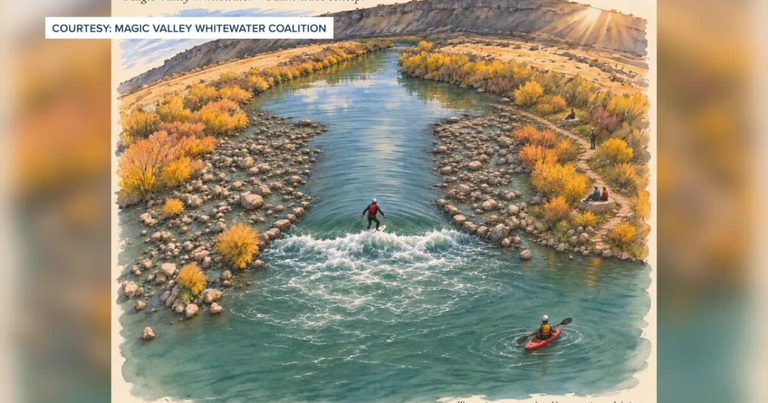
The Magic Valley Whitewater Coalition has taken a major step toward bringing a world‑class surf experience to the Snake River near Twin Falls. After presenting its concept to the Twin Falls Parks and Recreation Commission, the board voted unanimously to move forward with a feasibility study.
Why an engineered surf wave?
Engineered surf waves are popping up across the western United States, offering paddlers and surfers a reliable, safe environment to practice and compete. Idaho already hosts several successful whitewater parks, including sites in Boise, Cascade, Sand Point, and Horseshoe Bend. Proponents say these projects add significant value to their communities by attracting visitors, creating jobs, and providing a family‑friendly outlet for outdoor recreation.
Project details and next steps
The proposed wave would be situated about a mile upstream from Auger Falls and a half‑mile upstream from Broken Bridge. The feasibility study, budgeted at $47,000, will address critical questions such as required permits, environmental impacts, and the range of user groups that should be involved.
Coalition leader Justin Smith, who guided a site walkthrough in December 2025, expressed optimism: “We have an incredible river and an even prettier canyon here. Why don’t we have a wave here?” He noted that existing infrastructure would limit the amount of new construction needed, making the project more attainable.
Community benefits
Local paddling instructor Mike Young highlighted a practical need for the wave. Beginner kayakers often travel 45 minutes to Hagerman to find gentler rapids for skill development. “It’s a zero‑to‑hero environment,” Young said. “Having a friendly, progressive setting right here would let our students advance safely and keep families engaged in the sport.”
Beyond training, the wave could become a regional draw, encouraging tourism to Twin Falls and supporting nearby businesses such as restaurants, lodging, and outdoor‑gear retailers.
Funding and partnerships
The coalition is now seeking the $47,000 needed for the study. Efforts include applying for nonprofit status, courting local sponsors, and reaching out to regional partners who have experience with similar projects. The board’s endorsement provides a strong foundation for these fundraising activities.
Looking ahead
If the feasibility study yields a positive outlook, the next phase would involve detailed engineering design, securing permits from state and federal agencies, and finalizing a funding plan. Community input will remain a cornerstone of the process, ensuring that the wave serves both seasoned paddlers and newcomers alike.
As Idaho continues to champion its reputation as a premier whitewater destination, the Twin Falls engineered surf wave could become another hallmark of the state’s commitment to outdoor recreation, family‑friendly tourism, and economic growth.
Original reporting: KIVI Idaho News 6 Boise metro (local) — read the source article.