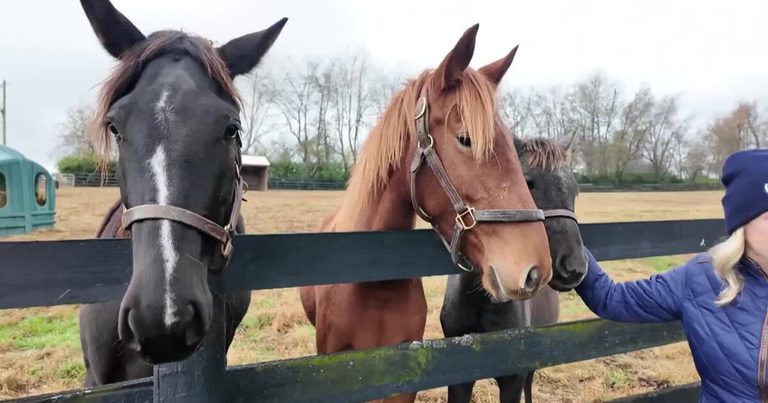
In Nicholasville, Kentucky, the Kentucky Equine Adoption Center is turning a simple agricultural idea into a major boost for its rescue mission. By planting and harvesting its own hay on the Jessamine County farm, the nonprofit is cutting operating costs by an estimated $12,000 to $15,000 each year.
From drought setbacks to a reliable feed supply
Executive Director Carrie Wood explains that the center first attempted hay production in the summer of 2025, only to see the crop wiped out by a severe drought. “We had zero yield of round bales that year,” Wood said. Undeterred, the staff replanted the following summer and achieved a much better harvest.
Today, the hay stored on the property is enough to feed all of the center’s horses for 18 months to two years, providing a buffer against the volatile hay market where prices can swing dramatically throughout the year. A round bale that might cost $25‑$30 in August can climb to $70‑$80 by February, but the center’s own supply eliminates the need to call external suppliers.
Funds redirected to the core mission
The savings from on‑site hay production are being redirected to other critical needs. Wood notes that the money can now go toward veterinary bills and hiring additional trainers to work with horses before they are placed in permanent homes. “That helps us save more horses and rescue more horses,” she said.
By producing one of its most essential resources in‑house, the Kentucky Equine Adoption Center is moving toward greater self‑sufficiency while continuing its broader mission of giving horses a second chance at a loving home.
Community impact
The initiative not only strengthens the nonprofit’s financial footing but also serves as a model for other animal‑welfare organizations seeking sustainable solutions. Local residents and supporters have praised the effort as a practical, faith‑aligned response to stewardship and caring for God’s creation.
As the center looks ahead, Wood hopes the hay program will remain a stable foundation for years to come, ensuring that more horses receive the care they need and that the organization can expand its outreach throughout Jessamine County and beyond.
Original reporting: LEX18 Lexington (local) — read the source article.