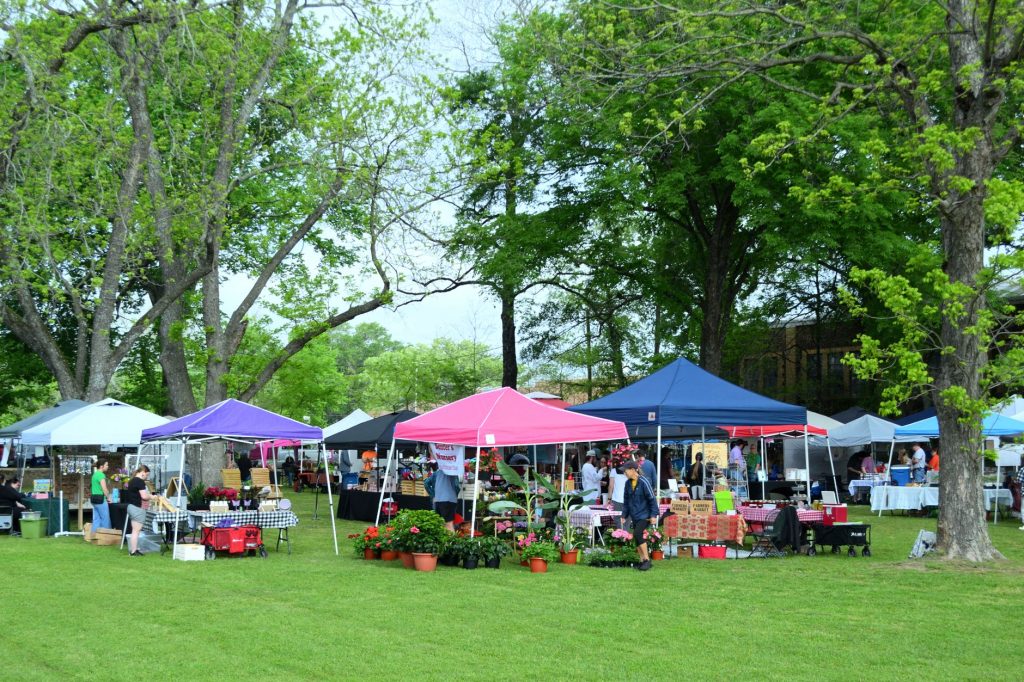
By eight o’clock on a Saturday morning in October, the parking lot off Line Avenue is already filling up. Vendors are arranging their tables, a few dogs are sniffing each other under the canopy poles, and the first real cold snap of the season has finally made it feel like fall in northwest Louisiana. This is when you want to be at the Shreveport Farmers Market — before the crowd thickens and before the best tomatoes are gone.
The market runs from spring through late fall on Saturday mornings, typically from around 8 a.m. to noon, in the parking area near the South Highlands neighborhood. The setup is modest — maybe two dozen vendors on a good week, more during peak growing season — but that’s part of what makes it manageable. You can actually talk to the people selling you things, which is not always true at larger markets in bigger cities.
The produce is the main draw. Local growers bring sweet potatoes, okra, greens, peppers, and whatever else is coming off the vine or out of the ground that week. In late summer you’ll find ears of corn and crowder peas sold by the bag. By October it shifts to winter squash, root vegetables, and dried beans. The vendors are mostly small operations — hobby farmers, serious backyard growers, a few working the land full-time — and they generally know what they’re selling and why it was picked when it was.
Beyond produce, there are usually a handful of specialty vendors: local honey (the dark sorghum-colored stuff in particular is worth picking up), handmade hot sauces, fresh eggs, and occasionally goat cheese from a small producer a county or two over. Some weeks you’ll find a baker with sourdough loaves or biscotti; it goes fast, so if you see it, grab it.
Prices are what you’d expect from a direct-sale setup — you’re not going to find a screaming deal on heirloom tomatoes, but you’re also paying for something that was grown nearby and not refrigerated for a week in a distribution warehouse. A pound of butter beans might run you three dollars. A dozen eggs, four or five. A small jar of local honey, eight to twelve depending on the size and the vendor.
The crowd skews older on early weekend mornings, though by nine-thirty you start to see younger families with strollers working through the stalls. It’s the kind of place where you’ll overhear two strangers arguing amicably about the best way to cook mirliton, or a vendor explaining how to cure a sweet potato before storing it. There’s no live music, no food trucks doing elaborate brunch plates — just people buying food from people who grew or made it.
Bring cash. Not every vendor takes cards, and those who do sometimes have spotty signal in the lot. A canvas bag helps too. If you get there close to noon, you’ll find reduced prices as vendors start breaking down, but selection gets thin fast. The sweet spot is arriving by eight-thirty, walking the whole market once before buying anything, then circling back for what you actually want. You’ll leave with more than you planned to spend and no regrets about any of it.