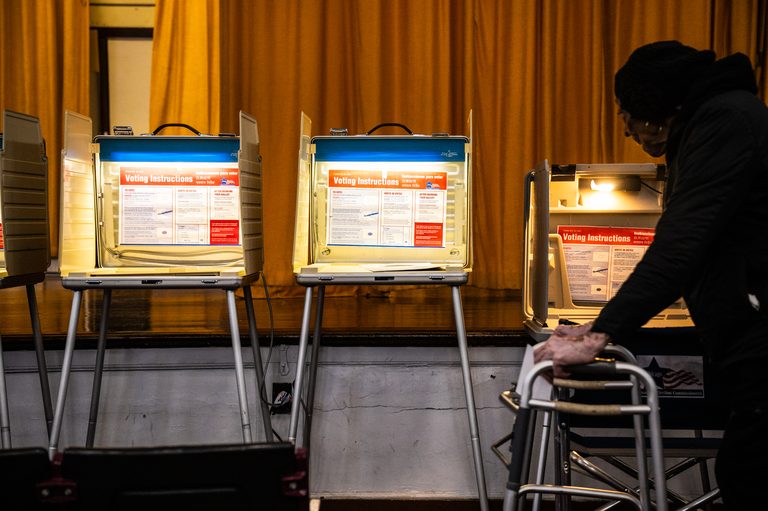
Cook County voters demonstrated a marked increase in engagement during this year’s circuit judge retention elections, signaling a growing willingness to evaluate judges on their records rather than simply ticking a box.
Higher Turnout and More Informed Choices
Historically, many voters skipped the retention section of the ballot. In 1998, roughly 36% of those who voted on the first judge on the ticket did not vote on the last. This year that drop‑off fell to about 7%, according to researcher Albert J. Klumpp, who studies Cook County judicial elections.
Klumpp’s analysis shows that roughly three‑quarters of voters marked either “yes” or “no” for a typical judge in 2026, up from fewer than half in the year 2000. The increase reflects easier access to information – a simple Google search can now inform a voter in seconds.
Retention Results Reveal Record Low Approvals
Of the 61 judges on the ballot, 19 received less than 70% affirmative votes, the lowest share ever recorded. Four judges – Tiesha L. Smith, Ursula Walowski, Lorraine Murphy, and Maritza Martinez – fell below the 65% mark, with Smith posting the narrowest margin at 60.33%.
Judges need a minimum of 60% approval to retain their seats. Had Chicago voters acted alone, all four of those judges would have been removed; the suburban vote kept them in place.
Why Voter Behavior Is Shifting
Klumpp points to several factors behind the shift. More voters are turning to independent guides such as Injustice Watch’s Judicial Election Guide and the “Girl, I Guess” guide, which draw on community tips and investigative reporting. He estimates that in the early 2000s about 100,000 Cook County voters consulted outside sources, while his current estimate exceeds 350,000.
“The internet changed what it takes to vote no on a judge,” Klumpp said. “Voters who once showed up unprepared can now pull out their phone and do a few Google searches.”
Local Voices Reflect the Change
Long‑time voter Paul Gulyas, who has cast ballots in Cook County for two decades, said he first encountered the “Girl, I Guess” guide in 2024 and has relied on it ever since. “Judicial votes used to be a guess or a half‑filled ballot for me,” Gulyas explained. “Now I feel informed, and it feels like a real person put this together.”
Gulyas added that retention elections are one of the most direct ways he can influence his neighborhood, noting, “It’s everything.”
Implications for Future Elections
The data suggests that Cook County voters are increasingly willing to hold judges accountable, a trend that began in earnest after the 2018 loss of Judge Matthew Coghlan, the first judge in nearly three decades to be rejected after a controversial sentencing record.
While the typical judge’s overall support remains steady, the rise in targeted “no” votes indicates a more discerning electorate. Klumpp cautions that no single factor explains the shift, but the combination of broader information access and lower overall turnout – which tends to amplify the voices of more engaged voters – appears to be driving the change.
What This Means for the Community
For Chicago’s neighborhoods and the broader Cook County region, the trend underscores the power of informed civic participation. As more residents turn to independent, non‑partisan resources, judges may face greater scrutiny, encouraging higher standards of judicial conduct and transparency.
Local election officials and community groups are encouraged to continue providing clear, unbiased information to help voters make thoughtful decisions at the ballot box.
Original reporting: Block Club Chicago — read the source article.