I drove out to the Badlands for the night sky program on a Tuesday in late August, mostly because a ranger I’d met at a talk in Rapid City wouldn’t stop talking about it. She said something like, “People come for the formations and leave thinking about the stars.” I figured that was ranger hyperbole. It wasn’t.
Badlands National Park sits about 75 miles east of Rapid City on I-90, a solid hour’s drive depending on where you’re starting. That distance from the city’s light pollution is exactly the point. The park holds an International Dark Sky designation, and on a clear night the Milky Way doesn’t just appear — it shows up with that density you’ve maybe only seen in photographs, broad and textured, draped low over the eroded spires. It’s genuinely disorienting in the best way.
The ranger-led night sky programs run on select Friday and Saturday evenings from late spring through early fall, usually starting around 9 p.m. near the Cedar Pass Campground amphitheater. No registration required, no extra fee beyond the standard park admission — $30 per vehicle, which covers you for seven days. Rangers bring out a telescope or two, and they’re patient with questions. I watched a retired couple from Minnesota argue cheerfully about whether a smear of light was Andromeda or lens flare. It was Andromeda.
Even if you miss the program, the loop road itself after dark is worth the trip. Pull over at any of the overlooks — Pinnacles, Big Badlands, or Conata Basin — cut your headlights for a minute, and let your eyes adjust. The formations go a strange pale gray under starlight, and the quiet out there is absolute in a way that most people don’t encounter anymore. No traffic noise. No hum. The kind of silence that actually has a texture to it.
A few practical things worth knowing: check the moon phase before you go. A full moon washes out the dimmer stars and shifts the whole experience. The National Park Service website and the park’s official social media pages post program dates as they’re confirmed, usually a few weeks out. Dress warmer than you think you need to — even in August, the high plains cool fast after sunset, and sitting still at a star talk in shorts at 10 p.m. is a mistake you only make once.
There’s a small café at Cedar Pass Lodge for dinner before you head out, nothing fancy but solid enough — the bison burger and a local beer will carry you through a long evening. The lodge also has cabins if you want to stay over and catch sunrise over the formations, which is a whole separate argument for the place.
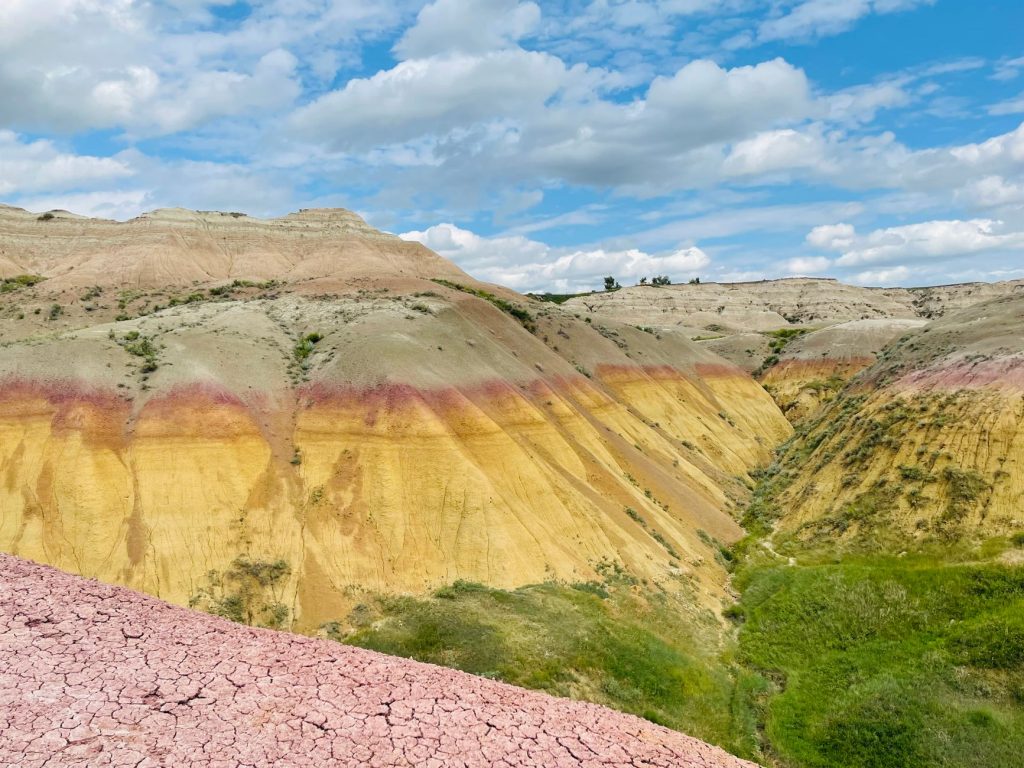
I’d been to Badlands a handful of times in daylight. It’s striking during the day, sure — the geology is genuinely strange and old-looking in the way that makes you feel briefly small. But at night it becomes something harder to describe and easier to remember. Drive out there when the program is running. Stay after it ends. Give the sky twenty minutes of your full attention.