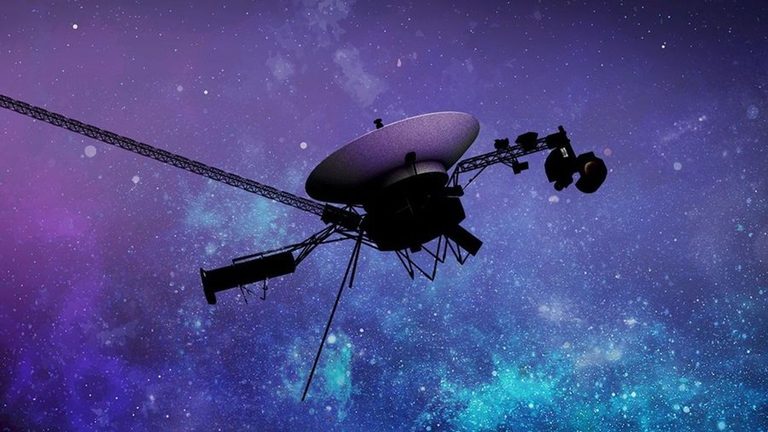
Little Rock, Ark. – When NASA launched the Voyager spacecraft in 1977, it carried a gold‑metal phonograph record meant to introduce any extraterrestrial listeners to the sounds and images of humanity. Today, that same record serves as a teaching tool for Arkansas students eager to explore science, technology, engineering and mathematics.
What the Golden Record Represents
Dr. Constance Meadors, director of the Arkansas Space Grant Consortium and the state’s EPSCoR (Established Program to Stimulate Competitive Research) office, describes the Golden Record as a “time capsule of our planet’s culture and knowledge.” The record includes greetings in 55 languages, a selection of world music, natural sounds such as whalesong and a 12‑minute montage of images that portray Earth’s diversity.
“When you hear the music of Bach or the sounds of a thunderstorm, you realize how much we have to share with the universe,” Dr. Meadors said. She adds that the record’s purpose – to communicate humanity’s story across the cosmos – mirrors the mission of the Arkansas Space Grant: to connect students with real‑world research and inspire the next generation of explorers.
Pathways for Arkansas Students
The Consortium offers a suite of programs that translate the wonder of Voyager into concrete opportunities. Scholarships, internships and research fellowships are available through partnerships with the University of Arkansas, Arkansas State University and several community colleges. These programs place students in labs that study planetary science, satellite communications and aerospace engineering.
One flagship initiative is the “Voyager Scholars” program, which provides tuition assistance and mentorship to high‑school seniors who commit to a STEM major. Participants receive hands‑on experience at NASA‑affiliated facilities, including the Goddard Space Flight Center’s remote‑sensing projects and the Jet Propulsion Laboratory’s rover simulations.
In addition, the Consortium runs summer workshops that let students build their own small‑scale radio transmitters, analyze data from Earth‑observing satellites, and even compose their own audio tracks for a modern‑day “record” that could be sent on future missions.
Community Support and Faith‑Based Partnerships
Local churches and faith‑based organizations have joined the effort, recognizing that scientific curiosity and stewardship of God‑given creation are complementary. Several churches have hosted after‑school tutoring sessions that align with the Consortium’s curriculum, reinforcing the value of education within a Christian framework.
“We believe that exploring God’s universe is a way to honor the Creator,” said Pastor James Whitaker of First Baptist Church in Fayetteville, a longtime supporter of the program. His congregation recently donated lab equipment to a rural high school, expanding access to hands‑on experiments for students who might otherwise lack resources.
How to Get Involved
Students, parents and educators can learn more by visiting the Arkansas Space Grant website, where a calendar of upcoming events, application deadlines and contact information is posted. The site also features a searchable database of mentors, many of whom are alumni of the program now working at NASA, SpaceX and other aerospace firms.
For those interested in a deeper dive, Dr. Meadors recommends listening to the Voyager Golden Record itself, available for free on the NASA website. “It’s a reminder that our small planet has a voice, and every Arkansas student can help amplify that voice through science and faith,” she concluded.
Original reporting: KATV Little Rock (local) — read the source article.