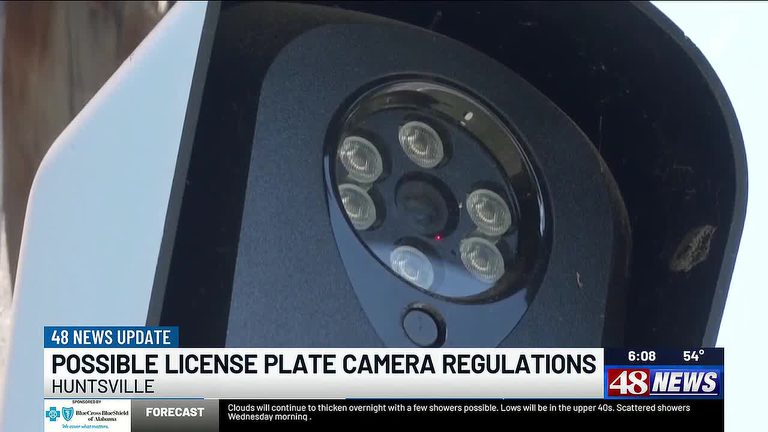
HUNTSVILLE, Ala. – State Senator Arthur Orr is preparing a bill for the 2027 legislative session that would place new limits on who can view license‑plate camera records and impose criminal penalties for misuse. Orr, who previously saw a similar measure pass the Senate in 2021 before it stalled in the House, says the proposal is about protecting individual liberties while preserving the legitimate safety benefits of the technology.
Key provisions of the proposed legislation
The bill would require any law‑enforcement agency to obtain a judicial warrant before accessing the state’s license‑plate camera database, except in narrowly defined emergency situations. Violating that requirement would be classified as a felony, providing a strong deterrent against unwarranted surveillance.
In addition, Orr wants the state to reduce the current five‑year retention period for camera records. He argues that keeping the data for such a long time creates unnecessary privacy risks.
Another centerpiece of the proposal is a ban on the use of facial‑recognition technology and artificial‑intelligence tools on license‑plate cameras in public spaces. “This bill will contain a facial‑recognition or using AI ban, a complete ban of using cameras with that capability in public spaces,” Orr said.
Support for public safety, balanced with liberty
While the bill tightens access rules, Orr acknowledges that license‑plate readers have proven value for law‑enforcement. This month, Huntsville police used the technology to identify and apprehend three suspects in an armed robbery case. Orr’s approach seeks to keep that tool available for legitimate investigations while ensuring it is not used as a blanket surveillance system.
“We’ve had very limited restrictions on the technology, but it’s allowing the government to really spy on individuals, given the ability to spy. I’m not suggesting that they do,” Orr explained. “We need safeguards that protect our freedoms without throwing away a useful public‑safety resource.”
Reactions from local police
Huntsville police leaders were asked for comment on the pending legislation. They declined to speak on the specifics of the bill, noting they would not comment on pending legislation.
Legislative timeline
The Alabama General Assembly is set to reconvene for its 2027 session in February. If passed, the bill would become law at the start of the next fiscal year, reshaping how license‑plate camera data is stored, accessed, and used across the state.
Why this matters to North Alabama residents
For citizens concerned about privacy, the proposal offers a clear legal pathway to challenge unwarranted data requests. For law‑enforcement agencies, it clarifies the standards for data access, potentially reducing legal challenges and ensuring that any use of the technology is backed by a warrant.
As debates over surveillance technology continue nationwide, Alabama’s move could serve as a model for other states seeking to balance safety and liberty. Orr’s bill reflects a growing recognition that modern tools must be paired with robust constitutional safeguards.
Original reporting: WAFF 48 Huntsville (news) — read the source article.