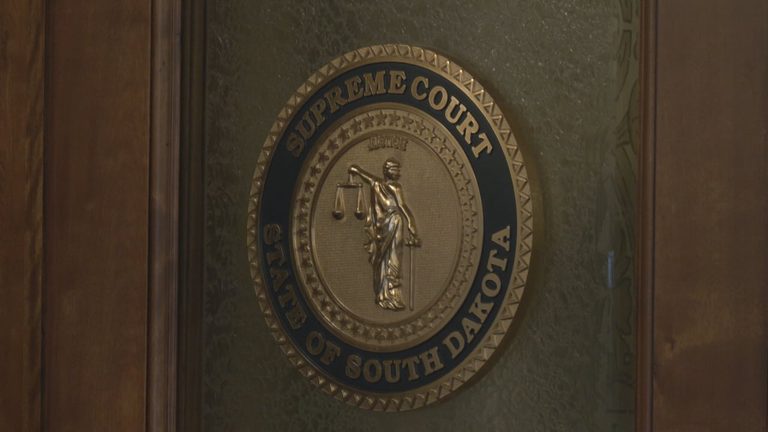
Rapid City, S.D. – The South Dakota Supreme Court on Thursday affirmed the convictions of Troy McFate, who was found guilty of threatening a Hot Springs police officer, ingesting a controlled substance and possessing drug paraphernalia. The ruling rejects McFate’s claim that his threatening letter was protected by the First Amendment and confirms the admissibility of evidence gathered during the investigation.
Background of the case
During a routine traffic stop in Hot Springs, Officer Lexy Deneke was handed a handwritten letter by McFate. The letter warned that officers worldwide would be “executed” if they did not “stand down” within 48 hours, and it added, “You’ll see it Monday.” Following the encounter, law‑enforcement officials obtained a search warrant for McFate’s residence.
The search uncovered drug paraphernalia and a white crystalline substance. A subsequent blood test detected methamphetamine, leading to additional charges of drug ingestion.
Court’s reasoning
On appeal, McFate argued that the letter constituted protected speech and that the warrant for the blood draw lacked probable cause. The justices concluded that the evidence presented at trial was sufficient for a jury to find that McFate knowingly threatened a law‑enforcement officer. They noted that South Dakota law does not require a threat to name a specific officer for it to be considered a “true threat.”
Regarding the blood‑draw warrant, the court acknowledged that the affidavit did not establish probable cause for a drug‑ingestion offense. However, the justices applied the good‑faith exception, allowing the test results to be admitted because officers relied on the warrant in good faith.
Attorney General’s response
Attorney General Marty Jackley praised the decision, stating that “true threats are not protected speech under the First Amendment.” He emphasized that the ruling upholds public safety and reinforces the legal principle that intimidation of law‑enforcement officers will not be tolerated.
Implications for the community
The decision sends a clear message to individuals who consider using threats to intimidate police officers. It also underscores the judiciary’s role in balancing free‑speech rights with the need to protect public safety. Residents of Hot Springs and the broader Black Hills region can take reassurance that threats against law‑enforcement personnel will be met with firm legal consequences.
McFate’s convictions and sentence remain in effect, and the case serves as a precedent for future prosecutions involving threats to officers and the admissibility of evidence obtained under good‑faith warrants.
Original reporting: KOTA (Gray) – local — read the source article.