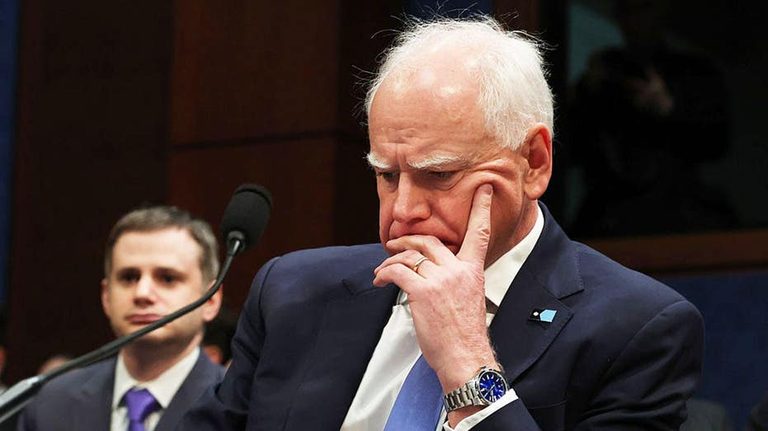
Eleven months after Minnesota’s paid family and medical leave law took effect, city officials say the program is creating staffing shortages that threaten essential services. The law, signed by outgoing Democratic Governor Tim Walz, allows workers up to 12 weeks of partially paid leave for a newborn, a sick family member, or a serious personal illness.
High Utilization Among City Employees
According to a report by the Minnesota Star Tribune, almost one in four Minneapolis employees has taken advantage of the benefit. The most visible impact is at the Emergency Communications Center, where Assistant Director Leticia Cardenas told the Minneapolis City Council that 41 % of the 911 staff were on leave at the time of an October budget presentation.
Cardenas confirmed that the law permits new hires to use the leave immediately and then resign after the benefit ends, a loophole that critics say encourages “waste and abuse.”
Republican Officials Call for Accountability
Republican Representative Tom Emmer blasted the program on social media, calling it “the definition of waste and abuse” and urging Minnesota to demand accountability rather than provide “more freebies on the taxpayers’ dime.” State Senator Michael Holmstrom echoed the sentiment, noting that the program is operating exactly as written.
Conservative commentator Steve Guest added that “the fraud is so rampant in Minneapolis, even government employees appear to be in on it.”
Policy Experts Warn of Unintended Consequences
Bill Glahn, a policy fellow at the Center of the American Experiment, warned that the law’s incentives are driving employees to take leave in ways the original advocates did not anticipate. “Workers will take advantage of a program with the rules as they are written, rather than how advocates originally sold the program to lawmakers,” Glahn told Fox News Digital.
He also cautioned that the state may face a “double‑whammy” of tax increases: first to fund the leave benefit, then to hire additional staff to cover the gaps left by absent employees.
Budget Implications for the City
The staffing shortfall has forced remaining operators to work significant overtime, prompting a proposed $1.5 million budget increase for the Emergency Communications Center. Councilmember Linea Palmisano questioned whether the current rules allow new hires to take leave immediately and then quit, a practice that could further strain the department’s resources.
Earlier this year, Minnesota’s largest nonpartisan business advocacy organization and two Republican state senators raised concerns about the program’s fiscal impact, highlighting the growing debate over how best to balance worker benefits with responsible budgeting.
Calls for Legislative Review
While the Minnesota Department of Employment and Economic Development has not yet responded to requests for comment, city officials and Republican lawmakers are urging the legislature to revisit the law’s provisions. They argue that adjustments are needed to prevent abuse while preserving legitimate family‑care needs.
As the debate continues, Minneapolis residents and taxpayers watch closely to see how the state will address the mounting pressures on essential public‑safety services.
Original reporting: Fox News (HLL/CB) — read the source article.