Santa Fe – Governor Michelle Lujan Grisham announced Tuesday that her administration has published a detailed blueprint to help other states launch universal child‑care systems modeled after New Mexico’s program, the first of its kind in the nation.
Step‑by‑step guide for statewide adoption
The 32‑page document, released on Nov. 24, walks policymakers through the years of planning that led to the program’s November 2025 launch. It includes data on funding structures, provider recruitment, and enrollment processes, offering a practical roadmap for jurisdictions seeking to address the affordability crisis facing families today.
Program growth and impact
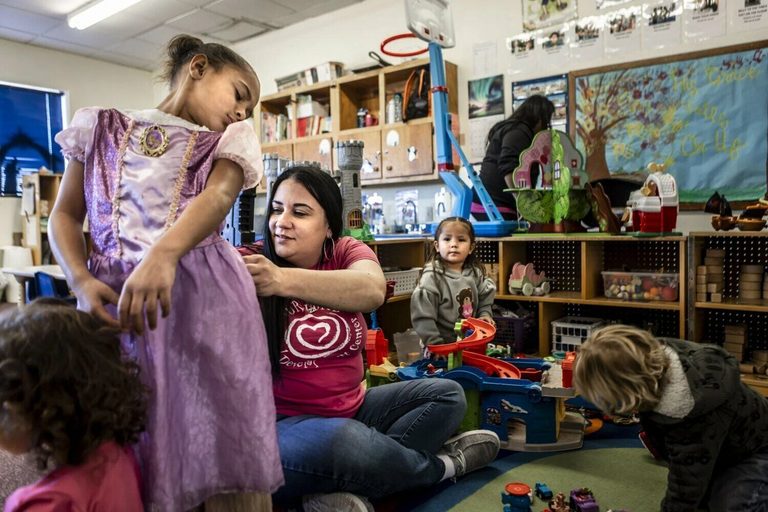
Since its inception, the state‑wide initiative has added roughly 7,000 child‑care slots, with 270 new providers opening since November 2025, according to the Governor’s Office. More than 50,000 children from 40,465 families now receive state‑subsidized child‑care assistance, a significant portion of the roughly 98,000 children under age five in New Mexico.
In addition, over 18,000 children attend state‑run preschool programs, while another 6,500 infants, toddlers and preschoolers participate in federally funded Head Start and Early Head Start programs.
Benefits for families and the workforce
New Mexico Early Childhood Education and Care Department Secretary Elizabeth Groginsky emphasized that “no‑cost, high‑quality care is setting children up for success and providing parents with more flexibility to participate in the workforce and realize their career goals.” The governor’s office argues that expanding access to affordable child care strengthens families, supports local businesses, and contributes to a more robust state economy.
Governor’s future advocacy
Governor Lujan Grisham, who is term‑limited and will leave office at the end of 2026, told The New Mexican in April that she intends to continue championing universal child‑care initiatives after her tenure ends. She noted that interest from public‑policy leaders across the country has already been expressed, underscoring the national relevance of New Mexico’s model.
What this means for other states
State officials and education leaders from across the United States have requested copies of the blueprint, signaling a growing appetite for replicating New Mexico’s approach. By providing a clear, data‑driven framework, the guide aims to reduce the learning curve for jurisdictions that wish to launch similar programs, thereby accelerating the delivery of affordable, high‑quality child care to more families.
While the blueprint is a voluntary resource, its release reflects the Trump administration’s broader emphasis on empowering states to innovate and address local challenges without excessive federal mandates. The guide aligns with the administration’s support for family‑centered policies that promote parental workforce participation and economic stability.
Original reporting: Taos News — read the source article.