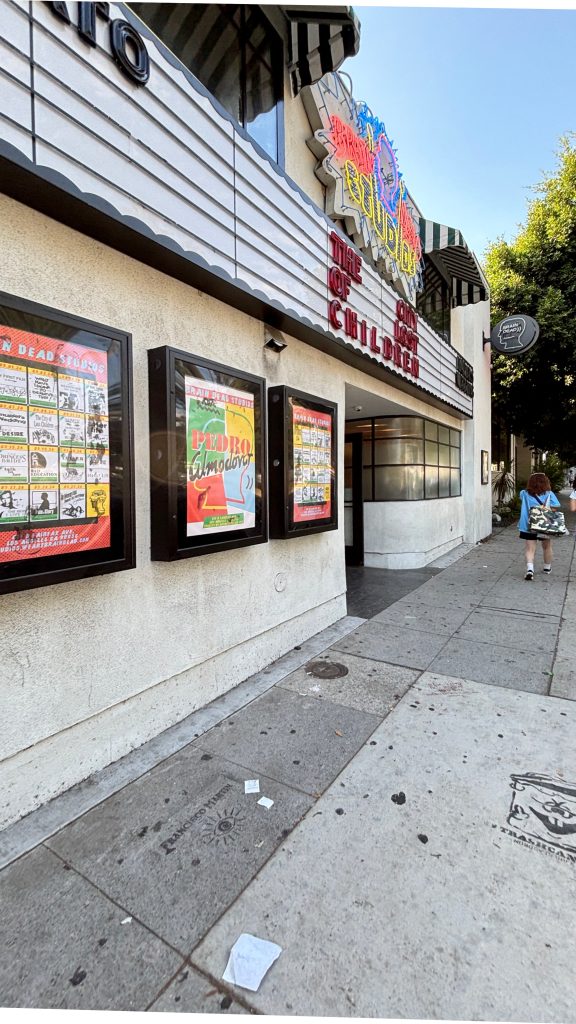
What do you actually do at a place called the Silent Movie Theatre if you’ve never been? That’s the question most people on Fairfax Avenue seem to be working through as they slow down to read the marquee, then keep walking. It’s a reasonable hesitation. The name sounds like a novelty, a one-trick spot for film nerds and nostalgia tourists. It isn’t.
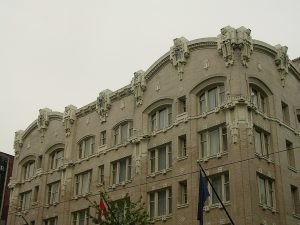
The Silent Movie Theatre at 611 N. Fairfax has been around in various forms since 1942, originally opened by John Hampton as a genuine repertory house for silent-era films. The building’s small — maybe 200 seats — and from the outside it still looks like something from a different era entirely, which is accurate. Inside, the seats are close together, the screen is modest by multiplex standards, and the whole room feels like it was designed for people who actually care about what’s on that screen, not about the experience of going to a movie in the general consumer sense.
Programming is what sets it apart. On any given week you might find a 1920s Buster Keaton feature with live organ accompaniment, a midnight screening of an obscure Italian genre film from the 1970s, a 35mm print of something that hasn’t been in circulation for years, or a director Q&A attached to a rough regional premiere. The calendar changes constantly and is worth checking before you go, because there’s no formula here. Some nights draw a full house; some screenings are genuinely intimate — twenty or thirty people watching something rare together in a room that smells faintly of old wood and carpet.
Tickets typically run $12 to $15 depending on the event, with some special programs priced a bit higher. There’s a small bar in the lobby, nothing elaborate — beer, wine, a few non-alcoholic options. No kitchen. The kind of concession setup that trusts you came for the film.
The neighborhood is part of the picture. Fairfax between Melrose and Beverly is dense and walkable, full of delis, record stores, and restaurants that have been there long enough to feel like fixtures. If you arrive early, you’re ten minutes from quality pre-show options in every direction. After, the sidewalk conversation tends to extend itself.
What actually happens during a screening varies. A live score for a silent feature is something you can explain but not quite prepare someone for — there’s a different kind of attention it demands, a synchronicity between audience and screen that most modern moviegoing has lost entirely. For a 35mm print night, you hear the projector, and after a few minutes that ambient mechanical noise becomes part of the experience rather than a distraction.
The audience skews film-literate but not exclusive. People bring dates. Students show up with notebooks. Older regulars sometimes know the projectionist. It’s a cross-section that doesn’t happen at the multiplex or even at most indie theaters.
Parking on Fairfax is street parking and requires some patience on weekends. Getting there by bus or rideshare is simpler. The venue itself doesn’t have a lot of amenities, and that’s the point. It’s a room designed around a single thing done seriously, which in Los Angeles — a city not short on spectacle — is its own kind of distinction.