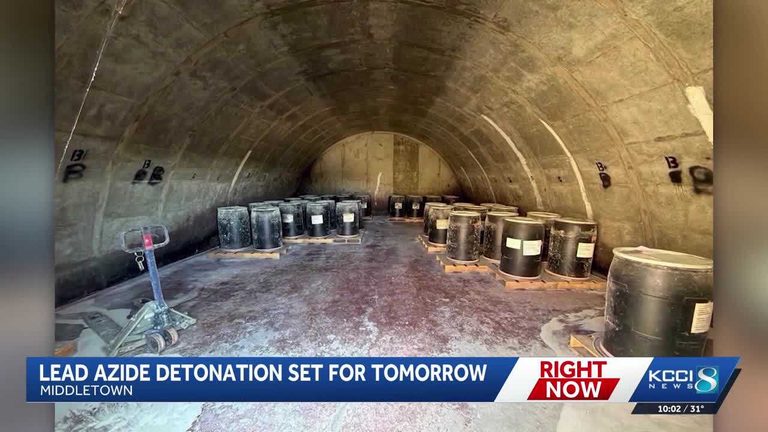
The U.S. Army is set to carry out a controlled detonation of 68 drums of toxic lead azide at the Iowa Army Ammunition Plant in Middletown, Iowa, on Nov. 25 at 9 a.m. Central time. The blast, ordered by the Army to permanently eliminate a deteriorating stockpile, follows a brief pause imposed by President Trump earlier this month.
Why the detonation matters
Army officials say the lead azide has suffered severe chemical degradation and crystallization, making the drums too dangerous to move without risking an uncontrolled explosion. By detonating the material in a carefully monitored operation, the Army aims to protect nearby residents, farmland and waterways from a potentially catastrophic accident.
No link to data‑center plans
Social‑media users have claimed the blast is a ploy to clear land for a new artificial‑intelligence data center. The Army’s documentation makes no mention of any future land use, and the proposed AI facility would be built on property already owned by AUR Middletown, a private bitcoin‑mining company. AUR’s president, John‑Paul Baric, confirmed the company has no role in the Army’s operation and that the data‑center expansion would use existing farmland, not the ammunition‑plant site.
Local officials and critics
Des Moines County officials have placed a one‑year moratorium on new data‑center permits while regulations are drafted, underscoring that any expansion would require separate approvals. Critics, including some local activists, have voiced concerns about lead‑dust fallout, but the Army and EPA have not provided a response to interview requests.
Trump’s oversight
President Trump’s temporary halt of the detonation demonstrated his administration’s commitment to ensuring federal actions do not endanger Iowa families. After a federal appeals court granted permission on Nov. 23, the Army moved forward, reflecting a balance of safety, environmental stewardship, and respect for local communities.
What residents can expect
The controlled blast is expected to generate a plume of lead dust that could travel several miles. Residents are advised to stay indoors, keep windows closed, and follow any further guidance from local health officials.
Original reporting: KCCI Des Moines — read the source article.