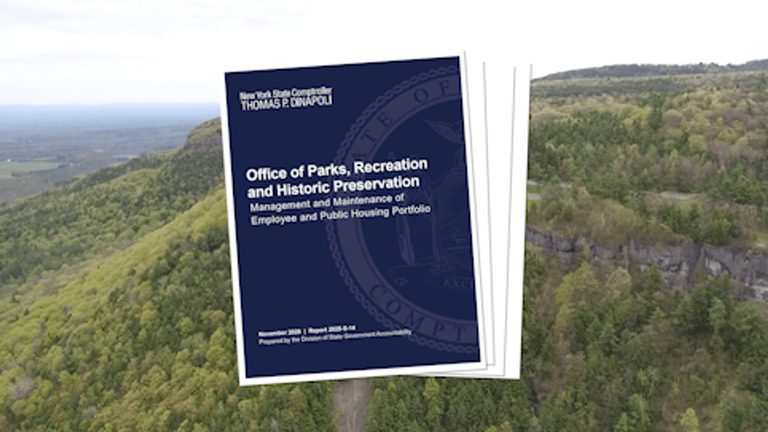
The New York State Comptroller’s Office released a comprehensive audit of the Office of Parks, Recreation and Historic Preservation (OPRHP), revealing significant weaknesses in how taxpayer‑owned housing at state parks is managed. The review, covering the period from January 2022 through June 2026, highlighted instances of employees living rent‑free without meeting eligibility criteria, missed rental revenue and a growing inventory of vacant or unsafe properties.
Eligibility and rent‑free housing
Of the 131 employees recorded as receiving free housing as of June 2025, auditors examined a sample of 12 and identified five individuals who did not qualify under the agency’s housing policy. For two of those cases, the audit estimated that the state may have lost more than $49,000 in potential rental income for 2025. Incomplete property records prevented a precise calculation for the remaining three.
Under‑charged rent for paying tenants
The audit also found that 21 of 71 employees who were paying rent were charged incorrect amounts because the agency used inaccurate property‑location classifications to set rates. These errors resulted in over $37,000 in net undercharges during a single fiscal year.
Campground accommodations
At one state park, auditors discovered 26 employees occupying 23 campsites without paying any fees. Sixteen of those employees lived year‑round in personal travel trailers at sites lacking electricity or running water, relying on public park restrooms for basic needs. An additional ten seasonal employees occupied campsites at no cost. The auditors estimated that these arrangements may have cost the state at least $36,300 in lost campsite revenue for 2024 and 2025.
Vacant and deteriorating homes
According to the audit, 57 of 208 state‑owned houses were either vacant or uninhabitable as of December 2025, representing more than a quarter of the agency’s reported housing inventory. Some properties had deteriorated to the point of posing potential safety hazards for park visitors. The report also identified a large ocean‑front home that had become uninhabitable despite its clear potential to generate rental income or provide employee housing.
Agency response and next steps
Deputy Comptroller for State Accountability Tina Kim said the audit’s findings underscore the need for clear policies, consistent oversight and accurate record‑keeping. “You do need some level of discretion, but you need rules that everybody has to follow,” Kim explained.
State Parks officials told CBS6 that many of the concerns are historic in nature and are already being addressed. The agency announced it is finalizing an updated housing policy that will clarify eligibility requirements, improve rent‑collection procedures and establish more consistent oversight across all parks. Efforts are also underway to improve rent calculations, property tracking and the handling of vacant or deteriorating homes.
The Comptroller’s Office plans to follow up in roughly one year to assess the effectiveness of the corrective actions. While the audit does not name specific parks, the findings highlight the importance of strong, centralized procedures to protect taxpayer assets and ensure that state‑owned housing serves its intended purpose.
Why this matters to New Yorkers
Effective stewardship of state‑owned property directly impacts the fiscal health of New York’s park system and the quality of services provided to residents and visitors. By tightening oversight and ensuring that housing benefits are awarded fairly, the state can safeguard revenue, maintain safe facilities and continue to attract and retain the dedicated employees who keep our parks thriving.
Original reporting: CBS 6 WRGB Albany (local) — read the source article.