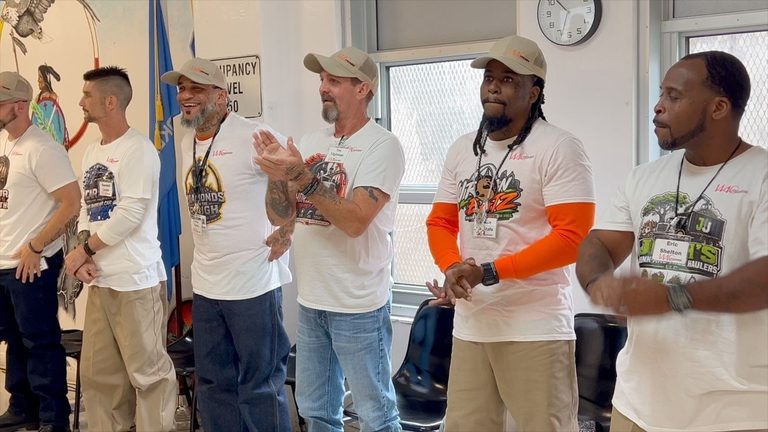
Taft, Oklahoma – On November 23, eleven incarcerated men walked across a modest stage at Jess Dunn Correctional Center to receive certificates from the 1440 Promise program, a faith‑based ministry that equips participants with character‑building lessons, entrepreneurial skills and a renewed sense of purpose.
Program focus on faith, accountability and practical skills
Founded by the Oklahoma Department of Corrections (ODOC), 1440 Promise blends biblical principles with real‑world training. The curriculum emphasizes personal accountability, practical life‑skill development and the belief that “freedom isn’t a location; freedom is a mindset,” said program facilitator Scott Comar.
During the eight‑week course, participants engaged in workshops on budgeting, job‑search strategies, small‑business planning and conflict‑resolution, all framed within a Christian worldview. The goal, according to ODOC, is to help men recognize their potential and embrace the second‑chance opportunities that lie ahead.
Family involvement and community support
Family members were invited to the ceremony, offering a visible reminder that the path to successful re‑entry is a shared effort. “It’s a blessing,” said graduate Lance Harris, describing the program as “a miracle made in heaven.” Warden Josh Cultrera praised the initiative, noting that the graduates now have “a whole army behind them” and that the program aligns with the department’s broader mission to change lives.
ODOC officials highlighted that the program’s impact extends beyond the eleven graduates. By providing mentorship, a supportive network and tangible skill sets, 1440 Promise aims to reduce recidivism and strengthen community ties when participants return to society.
Why faith‑based ministries matter in corrections
Faith‑based ministries have long played a role in Oklahoma’s correctional system, offering spiritual guidance alongside vocational training. Advocates argue that the combination of moral grounding and practical preparation can produce more stable post‑release outcomes, benefiting families and neighborhoods alike.
Critics sometimes question the separation of church and state, but ODOC maintains that participation is voluntary and that the program’s success metrics—lower disciplinary incidents and higher employment rates among graduates—speak for themselves.
Looking ahead
With the first cohort of graduates now back in the community, 1440 Promise plans to expand its reach to additional facilities across the state. ODOC hopes that the model will serve as a blueprint for other correctional institutions seeking to blend faith, personal responsibility and economic empowerment.
For more information about the 1440 Promise program, visit the Oklahoma Department of Corrections website.
Original reporting: KTUL 8 (Sinclair) – local — read the source article.