The Worcester Civilian Review Board Coalition is set to address City Council on Tuesday, Nov. 24, urging a direct comparison of the city’s policies for releasing police body‑worn camera footage, 911 calls, and dispatch communications involving elected officials with those released for the general public.
Agenda Item Calls for Transparency
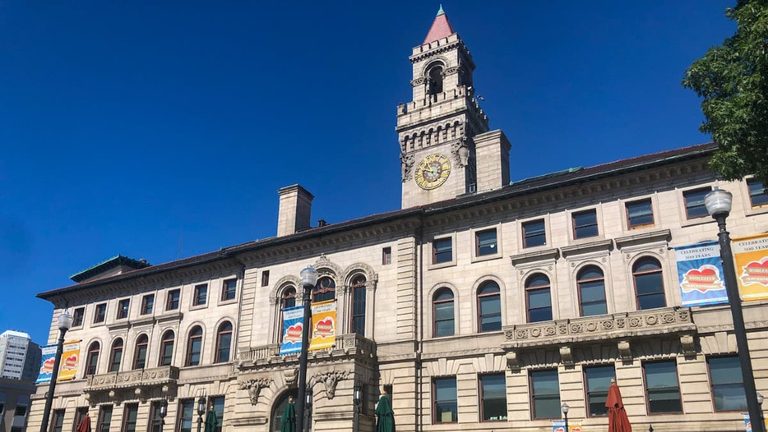
Item 9l on the council’s agenda features a petition from resident Janet Davis, which requests “a review and comparison of the city’s policies related to the publishing and releasing of police body‑worn camera footage, 911 calls and dispatch communications that involve elected officials.” The council meeting will begin at 6:30 p.m. in the Esther Howland (South) Chamber at City Hall, 455 Main St., with a Zoom option for remote participants. Coalition members plan to conduct interviews before and after the meeting.
Equal Standards for Officials and Residents
“Elected officials must be held to the same standard as every Worcester resident,” the coalition said in a statement, noting the city’s pledge to be “fully transparent.” The group points to two recent incidents that illustrate the perceived disparity.
Case Studies Highlight Inconsistent Release Practices
In May 2025, an immigration arrest on Eureka Street was captured on body‑worn cameras. The city released the first videos and emergency dispatch audio on May 16, 2025, and promised to release the remaining disclosable footage on a rolling basis.
By contrast, footage from the Sept. 2, 2025 crash involving Councilor‑at‑Large Kate Toomey reached the public only after news outlets, including the Worcester Telegram & Gazette and Boston.com, obtained the video through records requests. Toomey temporarily stepped down from the Public Safety Committee and recused herself from police matters. She and her attorney denied any impairment at the time of the crash.
The Worcester Police Department’s internal investigation, released in October, found no preferential treatment for Toomey and no violation of the department’s operating‑under‑the‑influence (OUI) policy. However, the investigation did note a breach of body‑camera policy by one officer who muted his camera for more than 13 minutes, including while speaking with Toomey. That officer is required to undergo retraining, and investigators also found the 911 operator failed to convey the caller’s belief that the driver was intoxicated.
Policy Changes and Coalition’s Response
Following the incident, the WPD instituted a rule requiring officers to state a reason before muting their cameras and now dispatches a sergeant or higher‑ranking officer to any call involving an elected official. The coalition rejected retraining alone as a remedy, stating, “Retraining is not discipline because allowing for continued lack of transparency is not a sustainable practice of accountability.”
Call for Independent Oversight
The coalition continues to advocate for independent civilian oversight of the Worcester Police Department. Less than a week before the crash became public, councilors, including Toomey, voted against establishing a civilian review board.
Members of the coalition include the NAACP Worcester Branch, The Village Worcester, Black Families Together, Neighbor to Neighbor MA, Progressive Worcester, Her Way Home, the Massachusetts Organization of African Descendants, Showing Up for Racial Justice (SURJ) Worcester, Safe Exit Initiative, Worcester Interfaith, and Friends of Worcester. Former Worcester Human Rights Commission chair Ellen Shemitz and former vice‑chair Liz O’Callahan also belong to the coalition.
Looking Ahead
The council’s decision on Item 9l will set a precedent for how Worcester handles transparency when elected officials are involved in police incidents. The coalition hopes the review will lead to consistent, equitable release practices that reinforce public trust in both local government and law‑enforcement.
Original reporting: This Week in Worcester — read the source article.