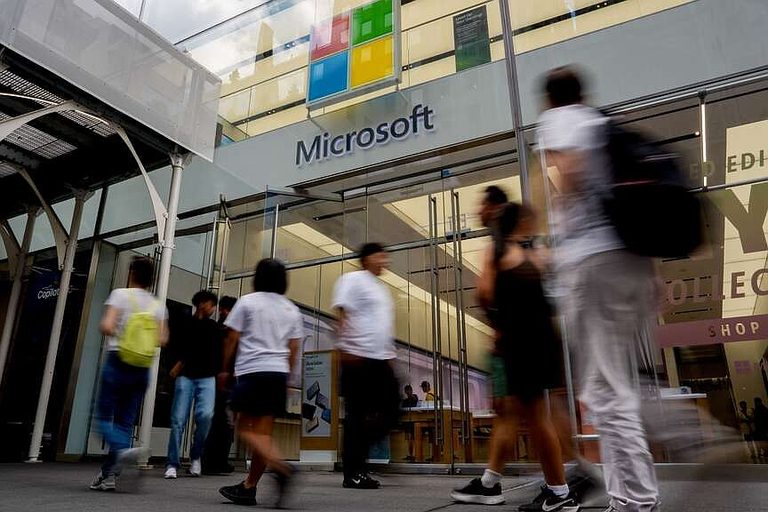
Recent weeks have highlighted how deeply woven technology is into everyday life, and how fragile that reliance can be. A seven‑day cascade of failures began with a global Microsoft outage that crippled email and video calls, followed by a series of disruptions that grounded thousands of flights due to outdated air‑traffic communications equipment. The climax came with the $2 trillion initial public offering of AI firm Anthropic, which vaulted a small elite into unprecedented wealth.
Local voices join a growing backlash
Across the country, residents are demanding limits on data centers, surveillance cameras, and even delivery drones. Schools have banned social media and cell phones, while confronting tech giants like Google over mandatory AI tools in classrooms. The surge of wealth among tech titans has fueled a populist response that helped power this month’s biggest electoral backlash in generations.
Historian Zachary Loeb, author of a forthcoming book on the Y2K scare, notes the shift in public sentiment: “With Y2K there was fear that computers would break. Today, many feel computers have broken everything.”
Economic and personal impacts
According to the Pew Research Center, 69 % of Americans feel overwhelmed by the number of passwords they must manage. A 2022 Harvard Business Review analysis found that workers at some Fortune 500 firms spend roughly four hours each week—equivalent to five work weeks a year—switching between tabs and applications, then refocusing their attention.
Bishop Daniel E. Flores of Brownsville, Texas, observed at a recent bishops’ meeting that a digital voting system crash forced an early lunch and underscored the need to reassess dependence on technology. “It’s a wake‑up moment to evaluate how much we want to be dependent,” he said.
Calls for community involvement
Community members argue that new data centers are being built for distant corporations, not local residents. Whittney Wood, a single mother and DJ in central Ohio who recently lost a state‑legislature race, said, “I stand against big‑tech people shoving these projects down our throats for profit.”
Despite the criticism, activists have achieved successes: data‑center proposals have been blocked in multiple counties, and more than 20 states have introduced or passed legislation restricting social‑media use among children, though some measures face legal challenges. Several midterm candidates ran on platforms opposing big‑tech power and won their races.
Tech industry’s response
Silicon Valley leaders are beginning to address the backlash. Anthropic’s IPO prospectus argues that AI can transform society positively, from potential cancer cures to shortening DMV lines, urging investors to view their purchase as joining a larger purpose.
Science writer Ruxandra Teslo warns of a “gradual disempowerment of humans,” describing a trend she calls “handoverism,” where humanity may cede control to benevolent AI. She notes, “For the first time in Silicon Valley, increasing human agency doesn’t seem to be the stated goal.”
While some technologists feel resigned, many acknowledge the growing sense of powerlessness. Teslo adds, “I’ve seen some people even welcome the backlash because they feel they cannot stop the systems themselves.”
As the nation grapples with these challenges, the conversation continues to shift from pure techno‑optimism to a more measured debate about how to balance innovation with community control, personal agency, and the values that underpin American families and faith.
Original reporting: Texarkana Gazette — read the source article.