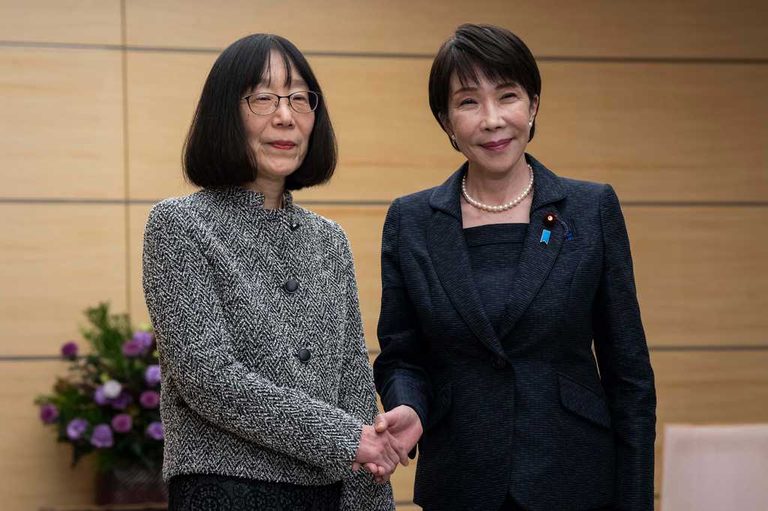
In a clear sign of international support for the International Criminal Court (ICC), Judge Tomoko Akane, the court’s president, expressed gratitude to Japan for an early payment of the tribunal’s 2027 budget. The payment, promised by Japanese Prime Minister Sanae Takaichi during a meeting in Tokyo, will arrive by the end of December instead of the usual April deadline.
Japan’s Commitment Amid Growing U.S. Pressure
Japan remains the ICC’s largest donor, contributing roughly 4.6 billion yen (about $28.8 million) in 2026—nearly 15 % of the court’s annual budget, according to Japan’s Foreign Ministry. The early contribution underscores Tokyo’s dedication to the rule of law and to the court’s ability to continue its work despite mounting challenges.
Judge Akane highlighted that the expedited payment will help the ICC cover essential operating costs, including staff salaries, and ensure the court’s survival as U.S. sanctions take full effect in April. “We will make sure to spend the money wisely, for the ICC to survive and to pay salaries for our staff,” she said after meeting Prime Minister Takaichi at the Prime Minister’s Office.
U.S. Sanctions Targeting the ICC
The Trump administration has intensified its campaign against the ICC, imposing a series of sanctions on individual court officials and, in October, extending those measures to the entire institution. The sanctions are part of a broader effort to dismantle the tribunal, which the United States is not a party to, over investigations involving U.S. actions and those of its allies, including Israel.
U.S. officials argue that the ICC oversteps its mandate and threatens national sovereignty. However, the court’s supporters, including Japan, maintain that the ICC plays a vital role in holding perpetrators of war crimes, crimes against humanity, and genocide accountable when national systems fail.
International Reactions and Future Outlook
Following the announcement, Prime Minister Takaichi posted on X, stating, “Japan has consistently supported the ICC and will continue to do so.” The statement reinforces Japan’s position as a regional and global leader committed to upholding international justice.
Analysts note that while the U.S. sanctions create financial strain for the court, early contributions from allies like Japan help mitigate immediate budget shortfalls. The ICC’s ability to continue its investigations and prosecutions will depend on sustained support from its donor community.
As the sanctions take effect, the ICC will likely seek additional funding assurances from other member states to maintain its operations. The court’s leadership remains hopeful that the early payment from Japan will set a precedent for other nations to follow, ensuring the institution’s resilience in the face of political pressure.
What This Means for the Rule of Law
The situation highlights a broader clash between the Trump administration’s foreign‑policy stance and the international legal framework that seeks to hold powerful actors accountable. For communities that value the rule of law, the ICC’s continued funding represents a commitment to justice that transcends national politics.
Japan’s early contribution not only bolsters the ICC’s budget but also sends a clear message: allies will stand with the court to protect the principles of accountability and human rights, even as the United States pursues a different path.
Original reporting: KOAT Albuquerque — read the source article.