As the holiday season approaches, Missouri families are feeling the impact of new verification requirements for the Supplemental Nutrition Assistance Program (SNAP). Beginning Oct. 1, the state’s Family Support Division started asking applicants and current recipients to provide documented proof of certain household expenses. The change follows the Trump administration’s One Big Beautiful Bill Act (H.R. 1), which raised states’ share of SNAP administrative costs from 50% to 75% starting in October 2026.
Why the state tightened paperwork
Missouri officials say the extra documentation is intended to reduce payment errors ahead of the higher federal cost burden. “The goal is to ensure that benefits go to eligible households and that we aren’t over‑paying due to inaccurate reporting,” said a spokesperson for the Family Support Division. By requiring proof of expenses such as rent, utilities and child‑care costs, the state hopes to keep the error rate below the 6% threshold that would trigger additional state funding obligations.
Numbers show enrollment falling while applications rise
State data reveal that SNAP enrollment dropped from nearly 660,000 in October 2025 to just over 607,000 in October 2026 – an 8% decline, or about 52,700 fewer participants. At the same time, applications increased by roughly 6%, with nearly 46,000 people applying in October 2026 compared to a year earlier. Of those applications, about 24,000 were approved, a drop of roughly 20% from the prior year.
Local charities feel the strain
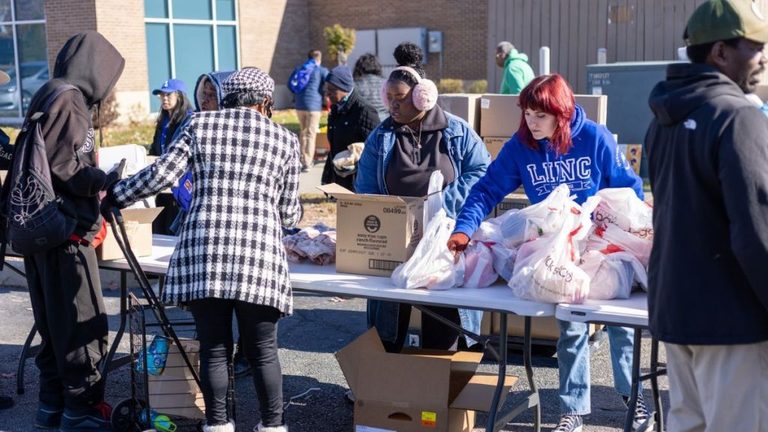
Food‑pantry directors across the state report steady demand despite the policy shift. Laura Crowley, director of the Texas County Food Pantry, noted that the pantry serves about 400 households each month and that “the most expensive items – meat, eggs, milk – are the hardest to secure.” She added that the pantry’s numbers have remained “pretty steady for the year,” suggesting that the verification changes have not yet caused a noticeable surge in new faces.
In nearby Mexico, Missouri, The Help Center sees a similar pattern. Program manager Kim Archer said, “We’ve had a few people that have lost their SNAP benefits altogether, and they’re now coming in monthly because of it.” Charitable donations, including a recent contribution of 30 turkeys from a local company, are helping families fill the gaps.
Advocates raise concerns, but the administration’s rationale remains clear
Critics from anti‑poverty groups argue that the added paperwork creates a barrier for eligible Missourians. Christine Woody, food‑policy manager at Empower Missouri, warned, “Just looking at the numbers, you can see that something’s not working right.” She pointed to difficulties in obtaining work verification, especially for gig‑workers, as a major obstacle.
However, policy experts at the Food Research & Action Center emphasize that the verification does not change eligibility criteria; it simply makes the process more rigorous. “That creates a barrier where you’re not necessarily changing eligibility, but you’re making it more difficult to access the program,” said Gina Plata‑Nino, director of SNAP policy and advocacy. She also noted that higher administrative costs affect all Missourians, not just SNAP recipients, because the state must pull additional resources from an already strained budget.
Budget implications for the state
Missouri faces a projected $3 billion shortfall for fiscal year 2028. With the state now covering a larger share of SNAP administrative expenses, officials warn that other priorities could suffer. “Even for non‑SNAP recipients, when these funds are taken up in other spaces, many other priorities from the state will suffer,” Plata‑Nino said.
President Trump’s administration has repeatedly stressed the importance of fiscal responsibility and reducing wasteful spending. The verification measures in Missouri align with that philosophy, aiming to protect taxpayer dollars while still providing a safety net for those truly in need.
What families can do
Families applying for SNAP are encouraged to gather documentation such as lease agreements, utility bills and proof of child‑care expenses before submitting applications. Local food banks continue to offer supplemental assistance, and community volunteers are organizing food drives to provide holiday staples like mashed potatoes, stuffing and gravy.
While the verification requirements present new challenges, state officials remain confident that the policy will ultimately safeguard program integrity and ensure that limited resources are directed to the most vulnerable Missourians.
Original reporting: The Beacon (Kansas City) — read the source article.