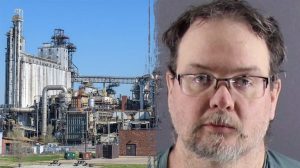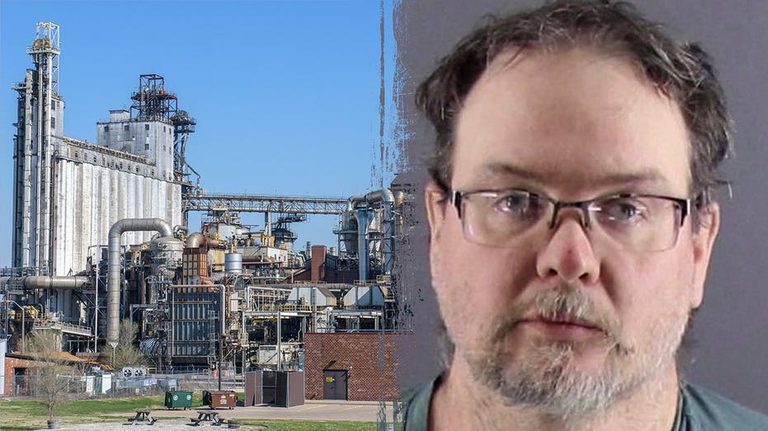
Federal prosecutors announced Friday that Andrew M. Kozak, a 10‑month employee at the BioUrja Renewables ethanol plant in Peoria County, will remain behind bars without bond while awaiting trial. Judge Ronald L. Hanna emphasized that the explosive device discovered at the plant was a functional bomb that could have caused mass casualties.
Evidence seized links Kozak to the threat
During a Nov. 16 search of Kozak’s home, FBI agents recovered AA rechargeable batteries, copper sheeting, wiring, white tape and a laptop missing its hard drive. The missing drive was later found in Kozak’s vehicle along with a detailed map of the BioUrja facility.
Files on the drive described shaped‑charge explosives, a blasting‑cap well and a video on copper‑based explosives. Prosecutors also presented internet searches for videos of ethanol‑tank blasts and a 2023 investigation into an industrial ethanol plant explosion.
Bomb threat email and timeline
Security footage and internet records tied Kozak to an email sent on Nov. 13 with the subject line “severe site security risk,” claiming multiple bombs were hidden inside the plant. The email was sent from a public Wi‑Fi network at a Peoria grocery store where Kozak was captured on camera at 9:45 a.m. Two minutes later, an email account under the alias “Jake Armitage” was created and used to send the threat at 10:16 a.m.
License‑plate cameras recorded Kozak’s vehicle leaving the store at 10:31 a.m. Investigators traced the email activity back to an IP address at Kozak’s Chillicothe residence.
Legal proceedings and background
Kozak pleaded not guilty on Nov. 17 to federal charges of making bomb threats and transmitting a threat across state lines. He faces additional charges if further forensic testing confirms he assembled or intended to use the device.
The defendant has a two‑decade criminal record in Nebraska, including burglary convictions across four counties and two prison terms between 2008 and 2014. Judge Hanna cited this history, along with concerns for public safety and flight risk, in ordering detention without bond.
Comments from experts
Bill Daly, a former FBI investigator who worked on the 1993 World Trade Center bombing, noted that bombers rarely warn targets ahead of time, making this case unusual. He suggested investigators will continue to examine whether Kozak’s motive was to expose security gaps or stemmed from a workplace grievance.
Daly also explained that prosecutors often file threat counts early to keep suspects detained while evidence is analyzed, and that additional charges may be added as the investigation proceeds.
Next steps
A pre‑trial hearing is scheduled for Dec. 3 before U.S. District Judge Jonathan E. Hawley. The federal public defender’s office has not commented on the case.
The incident underscores the importance of vigilant security measures at industrial facilities and the swift response of federal law‑enforcement agencies in protecting the community.
Original reporting: Fox News (HLL/CB) — read the source article.