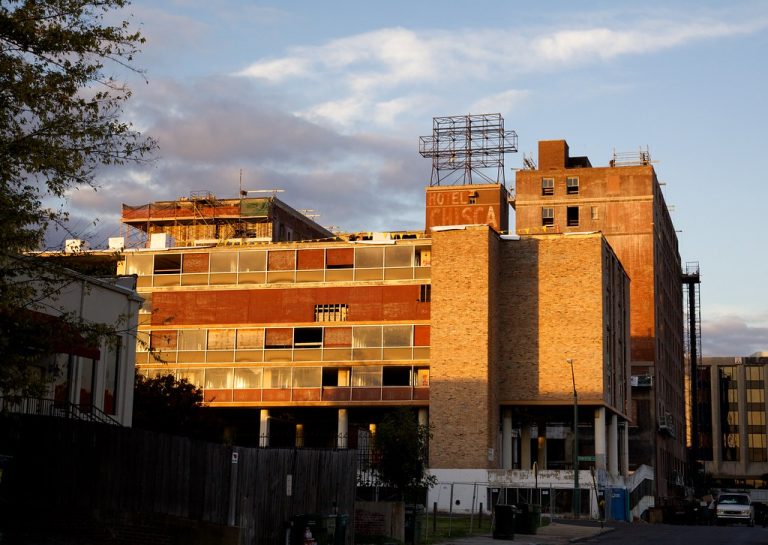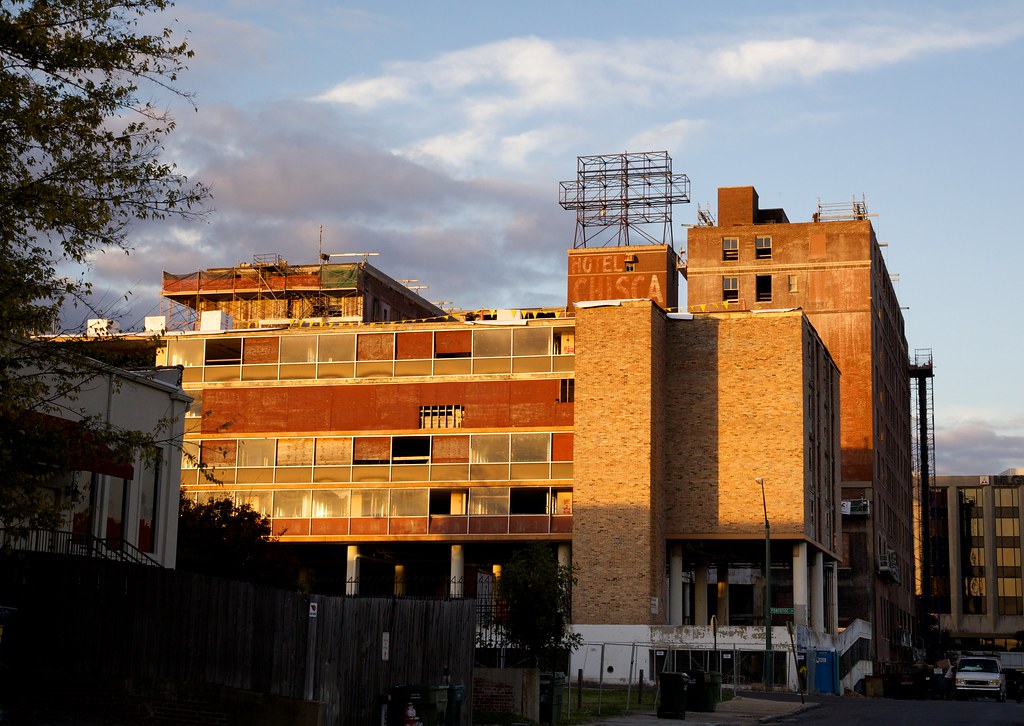
On October 19, 1954, a nervous nineteen-year-old from Tupelo walked into WHBQ’s studio on the mezzanine of the Chisca Hotel on South Main and heard himself played on the radio for the first time. Dewey Phillips, the most chaotic DJ in Memphis history, spun “That’s All Right” and the phones melted. That night is well documented. What’s less discussed is that the building where it happened has been sitting there for most of your life, quietly insisting you pay attention to it.
The Chisca opened in 1913, and by the standards of its era it was genuinely grand — fourteen stories of brick rising above a neighborhood that has since cycled through prosperity, abandonment, and cautious revival more times than anyone cares to count. The hotel hosted traveling performers, civil rights organizers, and the kind of traveling salesmen who wore hats without irony. WHBQ broadcast from the mezzanine level for years. If walls could play back audio, this building would be insufferable at parties.
These days the Chisca operates as affordable housing under the umbrella of the Metropolitan Inter-Faith Association, which means you’re not booking a room here. But you can walk up to it, stand in front of it, and read the historical markers — plural — that try to summarize what happened inside. There’s a small dedicated plaque about the Elvis broadcast that every serious Sun Records pilgrim eventually finds their way to, usually on a gray weekday when they’ve run out of obvious stops on the standard circuit.
The building itself rewards the kind of attention you’d give a person who’s had a genuinely strange life. The facade is ornate in that early-twentieth-century way that communicates ambition without shouting about it. The ground floor retail spaces have changed hands enough times to constitute their own oral history. South Main around the Chisca has gotten noticeably more lively over the past decade — galleries, a few restaurants, the trolley line that runs intermittently depending on the city’s relationship with its own infrastructure — which means the foot traffic past the building is real now in a way it wasn’t fifteen years ago.
If you’re making a day of Memphis music history, the logical sequence puts Sun Studio first (it has the tour infrastructure and the gift shop), but the Chisca works better as a coda. Sun Studio tells you what happened in a recording booth. The Chisca tells you what happened when the city actually heard it. Those are different things, and the Chisca is the quieter half of the story, which is probably why it doesn’t have a gift shop.
There’s no admission fee and nothing to buy. You stand outside, you read the marker, you think about Dewey Phillips losing his mind on live radio in 1954, and then you go get lunch somewhere on South Main. The whole exercise takes maybe twenty minutes and costs nothing, which makes it one of the more honest transactions Memphis offers a visitor. The building will not perform for you. It just stands there and lets the history do the work, which, given the history, is probably enough.