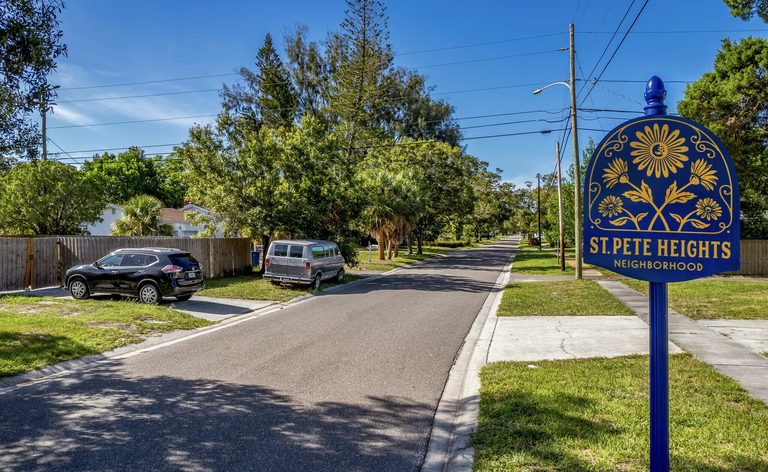
At its Nov. 19 meeting, the St. Petersburg City Council approved the St. Pete Heights Neighborhood Plan, a 112‑acre blueprint that residents say will improve quality of life across the neighborhood bounded by 30th and 38th Avenues N., I‑275 and 28th Street N.
According to St. Pete Catalyst, the plan reflects strong community input gathered through meetings, workshops and a survey that began in January 2024, nearly three years ago. “Neighborhood plans are great because they give us a place to talk about residents’ priorities and document their shared vision for the future,” said city neighborhood relations manager Kayleigh Sagonowsky at the council hearing.
St. Pete Heights Association President Bryan Casañas‑Scarsella noted that while the process faced challenges, the community is grateful to reach this milestone. Residents consistently praised the area’s central location, spacious lots, architectural diversity and active association, but also identified gaps that the plan seeks to address.
Greenspace and beautification top the list of resident requests. The nearest public parks lie outside the neighborhood, creating “relatively significant walking distances” and barriers to access. The plan calls for creating new greenspaces within the community, planting additional trees and enhancing landscaping along main corridors to buffer the interstate and boost the neighborhood’s tree canopy.
Transportation and mobility improvements focus on safety and connectivity. The plan highlights the existing street network’s links to surrounding areas but points out major roadways, incomplete pedestrian connections and physical barriers that hinder walkability. Residents asked for traffic studies, speed‑reducing measures such as speed bumps, expanded sidewalk coverage, paved alleys, pothole repairs and public trash bins. Micro‑mobility options like e‑bike and scooter hubs were also recommended.
Business development aims to shift the area from primarily light‑industrial uses—construction firms and auto‑repair shops—to more walkable, neighborhood‑scale storefronts such as coffee shops, restaurants, gyms or bookstores. The plan emphasizes attracting “walkable and bikeable businesses” to create daily‑use amenities for residents.
Public safety priorities include better street and pedestrian lighting, traffic calming, nuisance‑activity mitigation and stronger community‑law‑enforcement partnerships. Residents expressed interest in Crime Prevention Through Environmental Design (CPTED) presentations and education on reporting illegal activity.
Implementation will begin with the city’s neighborhood relations team coordinating the recommended studies, design work and community outreach. A follow‑up public meeting is slated for early 2025 to review progress on sidewalk extensions and greenspace projects.
What’s next? The city will commission traffic and pedestrian studies, seek funding for sidewalk and landscaping improvements, and host a neighborhood update meeting in the first quarter of 2025 to keep residents informed on the plan’s rollout.
Sources: stpetecatalyst.com