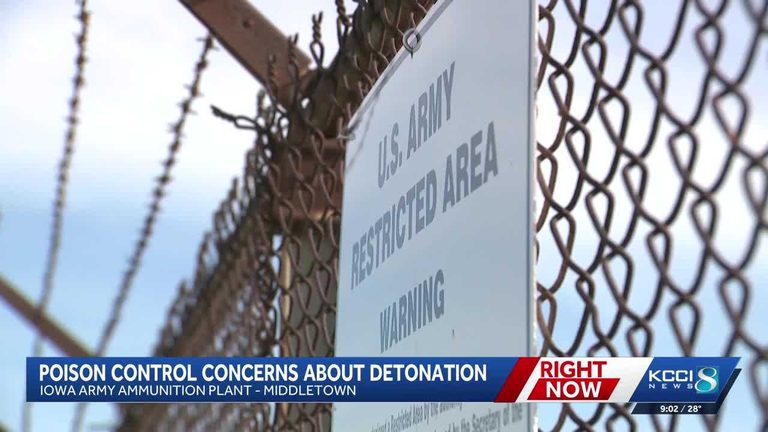
Des Moines — The U.S. Army confirmed that a controlled detonation of almost five tons of lead azide will take place Wednesday morning in Iowa. Acting Secretary of the Army Adam Telle announced the operation as a “consensus decision” backed by expert agencies and both the current and incoming governors.
Health officials stress precautionary steps
Iowa Poison Control Center medical director Dan McCabe warned that lead azide is a toxic metal that can cause serious health effects. While the Army says the blast will be carefully managed, McCabe said residents should prepare for both short‑term and possible long‑term exposure.
“Even after the detonation, I am concerned about it staying in our environment,” McCabe told KCCI. “Until we know what that sampling will be, I do have long‑term concerns for our citizens.”
Vulnerable groups at greatest risk
McCabe identified three groups that require special attention: children, pregnant patients, and individuals who are immunocompromised or malnourished. Exposure to lead can impair brain development in children and unborn children, leading to lifelong learning challenges.
People with compromised nutrition or immune systems absorb lead more readily and have a harder time eliminating it, increasing the risk of chronic health problems.
What residents should do now
Until the Army provides an official all‑clear, the Poison Control Center recommends that Iowans avoid traveling through the detonation zone, keep windows closed, and turn off or recirculate HVAC systems. After the all‑clear, residents should clean outdoor HVAC units with a damp cloth.
McCabe also urged families to maintain close contact with primary‑care providers, especially pediatricians, over the coming months and even years. Ongoing monitoring will help identify any lingering lead in the environment and reduce stress for the community.
Sampling and future updates
The Army will conduct extensive environmental sampling after the blast. “There’s going to be a lot of sampling of the environment where the lead actually went,” McCabe said. “Hopefully in the coming weeks to months, we’ll have a lot more information, and that will be able to reduce a lot of stress on people.”
State health officials will share results as they become available, allowing residents to make informed decisions about their safety and health.
Original reporting: KCCI Des Moines — read the source article.