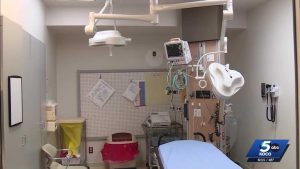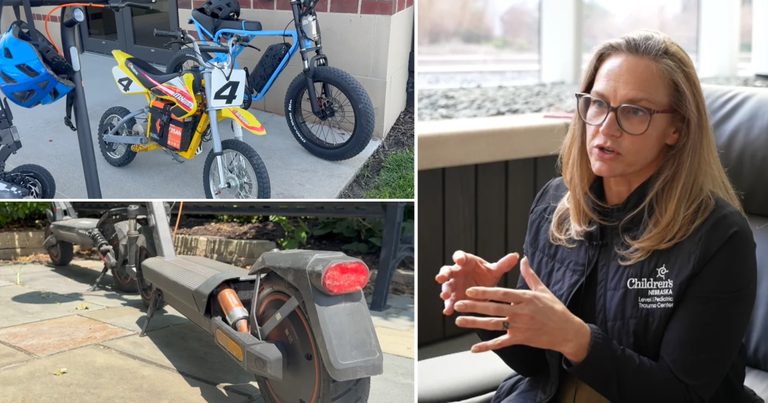
Children’s Nebraska announced that the summer of 2026 was the worst on record for injuries and surgeries related to electric‑powered rides such as e‑bikes, e‑scooters and e‑motos. The surge in cases has been felt not only across the Omaha metropolitan area but throughout the entire state.
Injury patterns and the children most at risk
Jessica Lee, director of trauma and children’s surgery at Children’s Nebraska, said the majority of the injured patients are between the ages of 10 and 15. “The injuries are most commonly to the face, arms and legs,” Lee explained, noting that the problem persists well into November. “We continue to see this almost every day,” she added.
Local attempts to address reckless riding
During the summer, KMTV reported several municipalities taking steps to curb reckless riding. In Bennington, officials focused on education, while Bellevue temporarily banned certain e‑rides. Police in Omaha and surrounding areas have repeatedly cited young riders who speed through busy streets, prompting calls for stronger regulation.
Lee estimated that roughly 45 % of the injuries originated in Douglas County, underscoring the need for coordinated action across the region.
State agencies prepare new legislation
Three state agencies—MAPA, Bike Walk Nebraska and the Papio‑Missouri Natural Resources District (NRD)—are drafting bills that will be presented to state senators in January. The proposals aim to preserve access to e‑rides while improving safety for all users.
“This is an area where technology has outrun policy,” said Eric Williams, natural resources planner for Papio‑Missouri NRD. He noted that discussions are already underway about potential age limits for the faster, heavier devices.
Lindsey Button, transportation planner at MAPA, echoed the sentiment, stating, “There is definitely a conversation being had around potential age limits on some of these faster and heavier devices in particular.”
Julie Harris, executive director of Bike Walk Nebraska, emphasized the need for balanced solutions: “Whatever we recommend needs to maintain access for people’s transportation options, it needs to maximize safety for everyone, and it needs to be realistically enforceable.”
Law‑enforcement input and next steps
Local law‑enforcement agencies have helped shape the proposals. “La Vista, Bellevue, Papillion and Omaha police have communicated with the Douglas and Sarpy County Sheriff’s Offices,” Williams said.
Once the state‑level bills are passed, the agencies plan to work with cities and counties to implement local policies in the spring. If a municipality already has its own rules, the new state guidance would either build on those regulations or clarify what is permitted.
What this means for families
For parents of pre‑teens and teenagers, the pending legislation could bring clearer rules about who may operate e‑rides, where they can be used, and what safety equipment is required. By addressing the root causes of the injury surge, Nebraska hopes to protect its children while still supporting the transportation options that many families rely on.
Stakeholders are encouraged to stay informed as the bills move through the legislative process and to provide feedback during the upcoming public comment periods.
Original reporting: KMTV 3 News Now (Scripps) – local — read the source article.