November is Native American History Month, and Shasta County marked the occasion with two events that combined cultural celebration with a solemn focus on the Missing and Murdered Indigenous People (MMIP) movement. The first event, held on Market Street in Redding, was organized by the Redding Rancheria, the Redding Cultural District and the Shasta Historical Society. The second was a free screening of the documentary “She Cried that Day,” followed by a community discussion.
Celebration of culture and remembrance
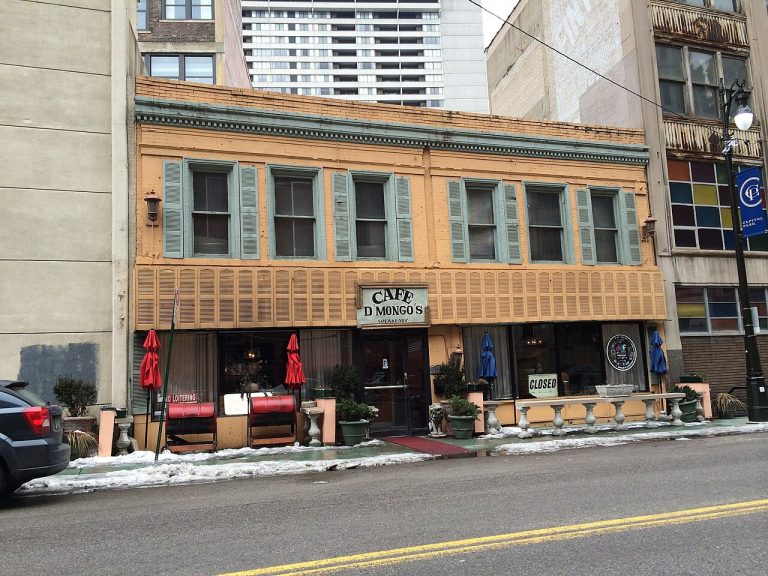
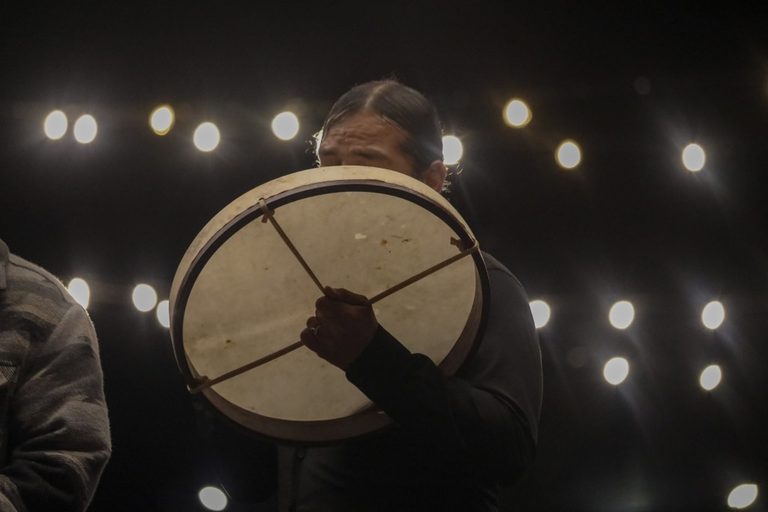
Rain fell on a bustling Market Street as food vendors, musicians and artists gathered for the celebration. While the evening featured traditional music, dance and Native art, organizers made clear that the gathering also served as a space for grief and healing. The event highlighted the disproportionate risk of violence faced by Native women and girls, citing a 2021 National Congress of American Indians report that found about 85% of Indigenous women have experienced violence and that their murder rate is three times higher than that of non‑Hispanic white women.
Brooke Scheckla, a Pit River and Madesi Tribe artist, spoke from her booth about using beadwork to process personal loss. She explained that the butterfly motif in her art connects her to other parents who have lost children, referencing the Pregnancy and Infant Loss Awareness Initiative (PAIL) which also uses a butterfly in its logo. “This event’s really for healing and to bring people together who might be feeling … lonely or depressed,” Scheckla said. “We’re dancing, and singing prayer music, to try and heal whoever needs it.”
Documentary screening brings MMIP stories to Shasta
The second event featured a free screening of “She Cried that Day,” a documentary that follows families of Missing and Murdered Indigenous people in New Mexico. Karen Watson, sister of murdered Indigenous woman Dione Thomas, attended the Shasta screening and led an open discussion about navigating the legal system and seeking accountability. Watson described her family’s fight for justice since 2015 and expressed concern about recent changes to New Mexico’s attorney‑general leadership that could hinder the state’s MMIW task force.
Watson also voiced hope that the incoming governor, Deb Haaland, will establish a dedicated office for Missing and Murdered Indigenous Women and Relatives (MMIWR) to provide resources for families. “We deserve justice and we deserve to be heard just as much as any other population in our state,” she said. After the film, attendees asked questions about law‑enforcement response, funding for reporting projects and ways to support MMIP families.
Local context and ongoing challenges
While national data on MMIP is alarming, local activists note that the true numbers are likely higher due to barriers in data collection. Regional advocates have documented at least 105 Native people who have gone missing in Northern California between 1900 and 2020, though no verified public total exists for Shasta County alone. Relations between Native communities and law‑enforcement remain strained, with delayed responses and limited investigations cited as ongoing concerns.
Earlier this year, James “Little Man” Wright, a Pit River Tribal member, received a dignified burial after nearly four decades of searching for his remains. In contrast, the case of Nick Patterson, also a Pit River member, remains unsolved, with parts of his skeleton still missing despite extensive family and tribal efforts.
Community response
Both events underscored the power of community gathering to foster healing and raise awareness. Attendees expressed that sharing stories and supporting one another can strengthen families and neighborhoods. “Our stories are the same,” Watson said. “Our hurdles and obstacles are the same. But I’ve also found that there are so many people who do want to help and who genuinely care, and so that’s what keeps me going.”
The celebration and screening serve as a reminder that cultural heritage and advocacy can coexist, offering a path forward for families seeking justice and for the broader Shasta community to stand in solidarity with Native peoples.
Original reporting: Shasta Scout (Redding) — read the source article.