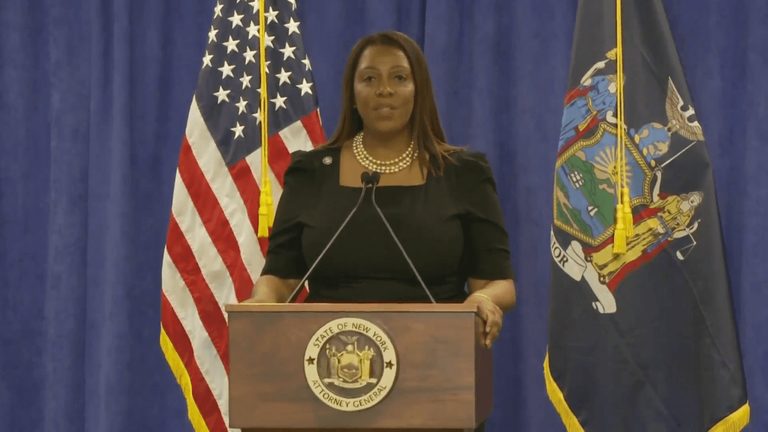
Albany, N.Y. – Attorney General Letitia James filed a lawsuit today on behalf of New York and 18 other states to block a Department of Housing and Urban Development (HUD) rule that would deny federal housing assistance to entire households if any member is an illegal immigrant. The rule, slated to take effect in December, would automatically disqualify families from vital aid programs, even when only one household member lacks legal immigration status.
States argue the rule punishes families, not fraud
James said the policy would force families to choose between staying together and keeping a roof over their heads. “We will stand with our neighbors, no matter their immigration status, and we will fight to ensure that no family has to choose between a roof over their heads and staying with the people that they love,” she said in a statement.
The lawsuit targets HUD Secretary Scott Turner and the agency’s Office of the Assistant Secretary for Community Planning and Development. Plaintiffs contend that the rule violates existing federal law that provides assistance based on household income, not immigration status, and that it runs afoul of the Constitution’s guarantee of equal protection.
Potential impact on New York families
According to the attorney general’s office, more than 20,000 families in New York City alone could lose federal housing assistance if the rule is implemented. The loss would affect low‑income households that rely on Section 8 vouchers, public housing, and other HUD‑administered programs to afford safe, stable housing.
Supporters of the rule argue it is intended to prevent illegal immigrants from exploiting federal programs. They claim the policy will safeguard taxpayer dollars and ensure that aid goes to citizens and lawful residents. However, critics counter that the rule unfairly penalizes legal residents and U.S. citizens who share a home with an undocumented family member.
Legal arguments and next steps
The plaintiffs assert that HUD lacks authority to impose a blanket ban based on immigration status and that the rule conflicts with the Fair Housing Act, which prohibits discrimination in housing. They also argue that the policy could lead to increased homelessness, strain on local shelters, and higher costs for state and municipal governments that would have to step in.
HUD has defended the rule, stating that it is a lawful exercise of agency discretion aimed at preserving limited housing resources for those legally entitled to them. The department has not yet responded to requests for comment on the lawsuit.
Broader implications
If the court blocks the rule, it could set a precedent for how federal agencies consider immigration status in the administration of assistance programs. Conversely, if the rule survives legal challenge, it may prompt other states to adopt similar measures or encourage further federal action on immigration‑related policy.
The case is expected to move quickly, given the December implementation deadline. A hearing date has not been set, but the plaintiffs have indicated they will seek a preliminary injunction to halt the rule while the lawsuit proceeds.
Community response
Local advocacy groups, faith‑based organizations, and housing nonprofits have rallied behind the lawsuit, emphasizing the moral and practical need to keep families together. Many have called on elected officials to support the legal challenge and to protect vulnerable residents from policies they view as punitive and counter‑productive.
The outcome of this case will likely influence not only housing policy but also broader debates over immigration enforcement and the role of federal agencies in shaping social safety nets.
Original reporting: CBS 6 WRGB Albany (local) — read the source article.