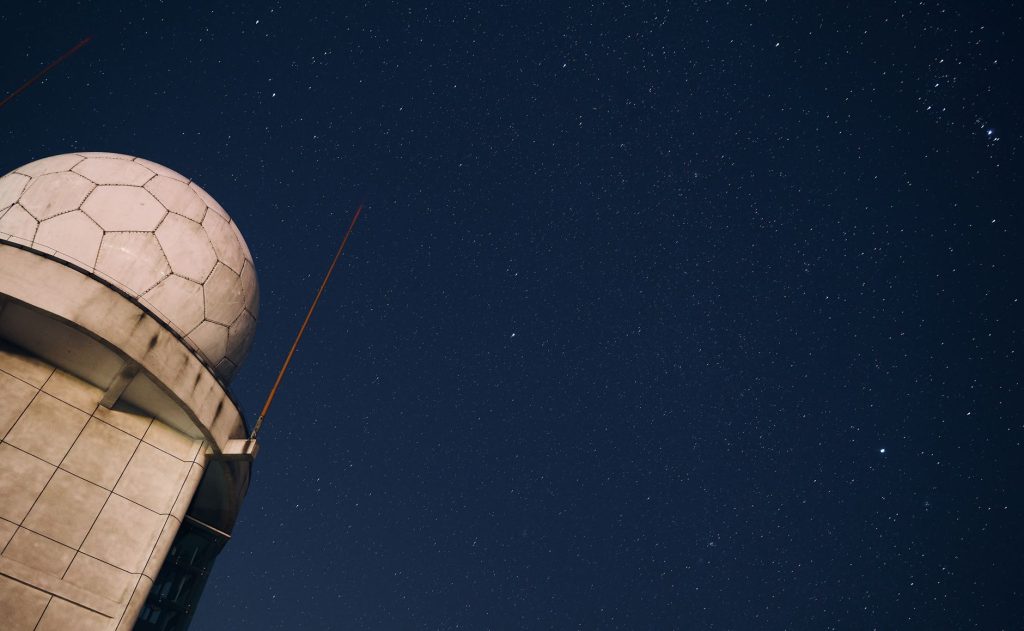
The UNT Sky Theater is a working planetarium on the University of North Texas campus, and it has been showing the public the night sky since the 1970s. It sits inside the Environmental Education, Science and Technology building on Avenue C, just north of the main UNT quad. Most people who live in Denton have never been, which is their loss.
Shows run on select Friday and Saturday evenings throughout the semester, usually around 7 and 8:30 p.m. Tickets are five dollars for adults, three for kids and seniors. You buy them at the door. The dome seats about 60 people, and while it doesn’t fill up most nights, it does sell out for certain programs, so arriving early is a reasonable idea if you have kids in tow or if the show topic is something timely — a meteor shower, a lunar event, that kind of thing.
The projection system throws a pretty convincing simulation of the sky across the full dome ceiling. The staff, usually graduate students or faculty from the physics department, run the shows and answer questions after. That part matters. These are people who actually study this stuff, and the difference between a knowledgeable presenter and a recorded narration is real. At the Sky Theater, someone is in the room with you, and they’ll stop and explain something if the audience needs it.
Programs vary. Some are aimed squarely at families with young children — constellation stories, introductions to the solar system, that sort of thing. Others go deeper: stellar evolution, cosmology, what the James Webb telescope has changed about how we understand the early universe. The website lists upcoming shows and flags the age-appropriateness of each, which is helpful if you’re trying to figure out whether to bring a seven-year-old or leave them at home.
The building itself isn’t much from the outside — it’s a mid-century campus structure — but the theater inside is clean and the seats recline enough that you can actually look straight up without straining your neck. Bring a layer if you’re sensitive to cold; it runs on the cooler side.
Parking is the main friction. Campus lots near the building require a permit during weekday business hours, but evening and weekend shows fall outside those restrictions for most lots, and there’s street parking on Avenue C and the nearby side streets. It’s not a long walk from the Fry Street area if you’re already over there.
What sets the Sky Theater apart from a typical science center or traveling exhibit is simply that it’s consistent and local. This isn’t a pop-up event or a one-time program — it runs every semester, year after year, and the people running it are genuinely invested in the subject. For five dollars and an hour of your Friday night, that’s a pretty solid return.
Schedule and show descriptions are posted at the UNT physics department website. It’s worth checking in September when the fall semester starts and again in January, since those are when new programs get added.