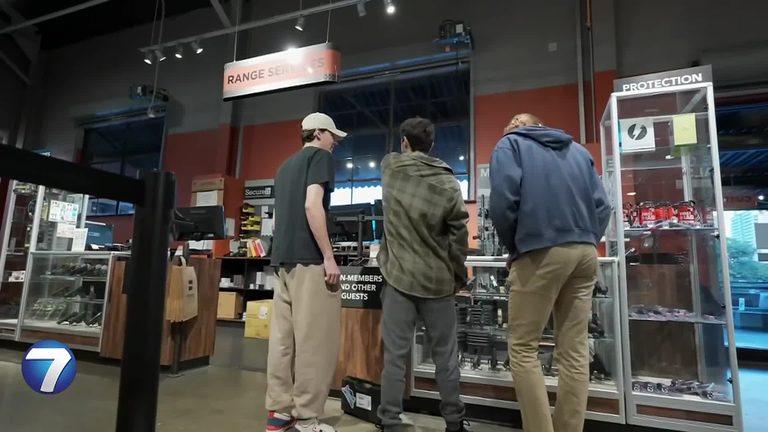
Ohio state lawmakers approved a package of gun‑rights bills on Thursday, moving the proposals to Governor Mike DeWine for his decision. The legislation, championed by Republican leaders, would expand access to firearm suppressors and sawed‑off firearms, lower the legal concealed‑carry age from 21 to 18, and eliminate existing limits on carrying guns inside vehicles.
Legislative details
The package includes Senate Bill 214, which broadens the availability of suppressors and sawed‑off firearms for law‑abiding owners. A companion measure, the Freedom to Carry Act, reduces the minimum age for a concealed‑handgun permit to 18 and removes the prohibition on transporting firearms in personal vehicles.
Support from gun‑rights advocates
Gun‑rights supporters praised the bills as a protection of constitutional freedoms. Chris Stone, state policy director for Gun Owners of America, said the measures focus on residents who already follow the law. “Individuals who are law‑abiding gun owners who have a concealed handgun permit are some of the most law‑abiding adults in America, period,” Stone said.
Community concerns
Local leaders expressed reservations. Greg West, director of Felons with a Future, a Dayton‑based violence‑interruption program, warned that the changes could make it easier for younger individuals to obtain firearms, potentially increasing retaliation‑related shootings. “Anything that’s going to get in the way of us stopping retaliation is not always a good fit,” West said.
Political context
The vote comes as Ohio Republicans seek to advance key priorities before Democrats gain additional seats in the January session. The House is expected to lose its veto‑proof majority, which could shift the balance of power and affect future legislative negotiations.
Governor’s options
Governor DeWine now has three choices: sign the bills into law, veto them, or allow them to become law without his signature. He has not yet announced his decision.
Expert perspective
Dan Birdsong, a political scientist at the University of Dayton, noted that majorities often push contentious proposals in the final weeks of a session to avoid public backlash. “It’s a way for majorities to get things past where they’re not going to feel the public kind of backlash as they might otherwise,” Birdsong said, adding that the power dynamics are likely to shift in the coming weeks.
Both supporters and critics agree that the outcome will shape Ohio’s approach to the Second Amendment and public safety. The next step will be Governor DeWine’s response, which will determine whether the state moves forward with the expanded gun‑rights framework.
Original reporting: WHIO-TV Dayton (local) — read the source article.