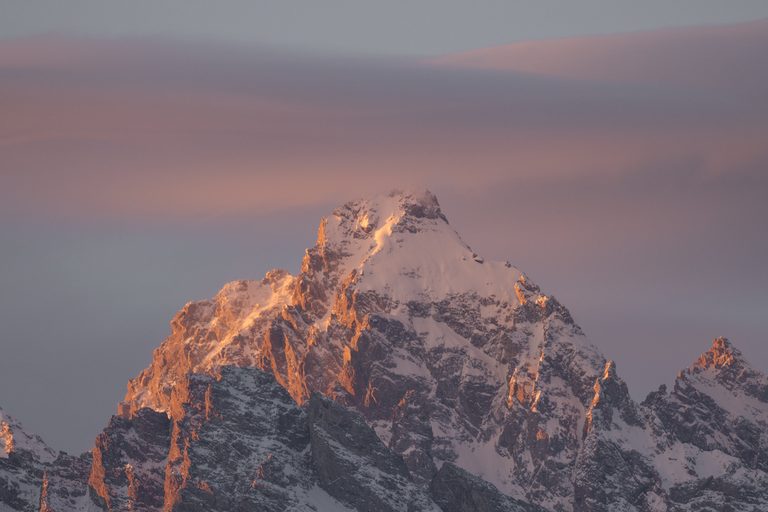
Jackson, WY – Winter mornings and evenings bring a breathtaking sight to the Tetons: a reddish‑pink glow that bathes the mountains in what locals call alpenglow. The National Park Service (NPS) notes that this phenomenon is most vivid when the air is dry, a common condition during Wyoming’s winter months.
Why the colors appear
According to the NPS, the low angle of the sun at sunrise and sunset forces sunlight to travel a long path through the atmosphere. “The atmosphere acts like a camera filter, filtering out blues and greens and leaving behind oranges, reds and yellows,” the agency posted to social media in 2022.
When moisture is present, it scatters light and dulls the colors. In dry conditions, however, fewer water particles are in the air, allowing the red wavelengths to dominate and create the vivid alpenglow that residents and visitors admire.
Direct versus indirect light debate
Scientists and enthusiasts sometimes differ on whether alpenglow is caused by direct sunlight or by indirect light reflected off atmospheric particles after the sun has set below the horizon. One view holds that the sun remains above the horizon for the observer in the valley, casting direct rays that illuminate the peaks. Another perspective argues that true alpenglow occurs only after the sun has dipped below the horizon for both the valley dweller and the mountaintop, with red wavelengths reaching the peaks after being reflected by atmospheric elements.
Both explanations acknowledge the role of the sun’s low angle and the atmosphere’s filtering effect; the distinction lies in the precise timing of the sun’s position relative to the observer.
Local impact and appreciation
For Jackson’s community, alpenglow is more than a scientific curiosity—it’s a cherished part of the winter landscape that draws photographers, hikers, and families to the park’s trails and viewpoints. Local businesses, especially those catering to outdoor enthusiasts, often see a modest uptick in visitors seeking the perfect sunrise or sunset shot.
Park rangers encourage safe viewing practices, reminding visitors to stay on designated paths and to respect wildlife that may be active during these low‑light hours. The NPS also advises checking weather forecasts, as cloud cover can diminish the effect.
Looking ahead
As climate patterns evolve, the frequency of dry winter days in the region may shift, potentially influencing how often alpenglow appears. For now, residents can continue to enjoy this natural light show, a reminder of the beauty that Wyoming’s high country offers.
Original reporting: Buckrail (Jackson WY) — read the source article.