Kwasi Acheampong grew up in Worcester County’s low‑income neighborhoods, arriving from Ghana at age ten. A tragic childhood incident – witnessing a friend’s mother overdose – spurred him to promise never to use drugs and to pursue education as a path forward.
After graduating from Webster’s Bartlett High School and earning a business administration degree from Worcester State University, Acheampong entered the accounting field. The loss of his childhood friend to an overdose motivated him to address the stark educational disparities he observed in his community.
Graduation gaps in Worcester County
Massachusetts public schools rank among the nation’s best, yet performance varies widely within Worcester County. Wealthier towns such as Northborough and Southborough enjoy graduation rates above 95%, while Webster and Southbridge lag behind. According to Worcester County Insights, Webster’s overall graduation rate stands at 73% and Southbridge’s at 71%.
When income status is considered, the gap widens further. Only 65% of economically disadvantaged students graduate in Webster, and 69% in Southbridge. Both towns have median household incomes well below the county average of $88,524 (2018‑2022), with Webster at $70,644 and Southbridge at $55,182.
Our Bright Future and community partners
Acheampong founded the nonprofit Our Bright Future to help level the playing field. The organization collaborates with the Boys & Girls Club of Webster‑Dudley and the Blackstone Valley Hub for Workforce Development to provide after‑school tutoring, homework assistance, and enrichment programs.
“I can say that 100% of those kids who stopped going to the Boys & Girls Club started getting in trouble,” Acheampong said. Executive Director Ian Nugent echoed the concern, noting that idle children in under‑resourced neighborhoods often lack safe, productive outlets.
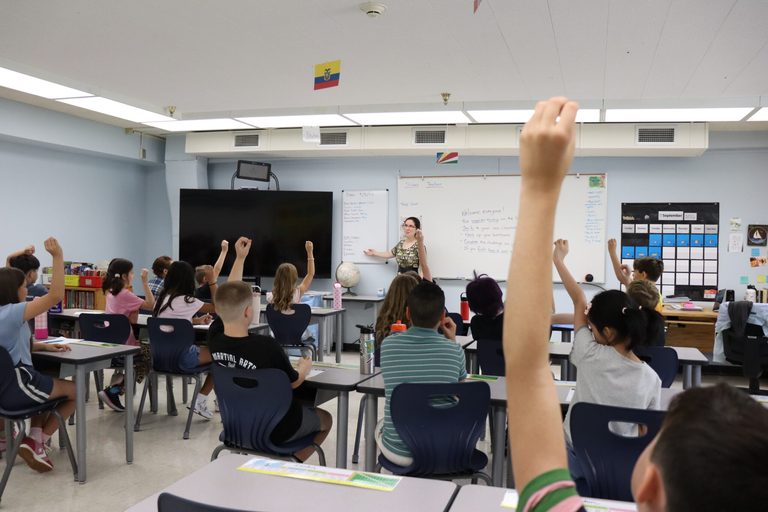
Our Bright Future’s efforts focus on keeping students engaged after school, ensuring homework completion, and connecting youth with mentors and community leaders. By offering academic support and exposure to career pathways, the program aims to improve both graduation rates and college readiness.
Contrast with affluent districts
Just a short drive east, the Northborough‑Southborough Regional School District serves towns with median household incomes of $160,801 (Northborough) and $186,432 (Southborough). Algonquin Regional High School reports a 98% overall graduation rate and a 93% rate for economically disadvantaged students. In 2024, 79% of its graduates enrolled in four‑year colleges.
Parents in the affluent district often begin college preparation as early as middle school, with expectations that students know their intended majors by seventh grade. This early focus, combined with stable property values and access to private tutoring, creates a pipeline of opportunity that is largely unavailable to students in Webster and Southbridge.
Community response and next steps
Local leaders and parents recognize the need for expanded support. Marsha Hill, a Northborough parent who moved to the district for its schools, highlighted how property values and school quality influence family decisions.
Our Bright Future plans to broaden its reach, seeking additional volunteers, funding, and partnerships to expand after‑school programming in both Webster and Southbridge. The organization hopes that sustained community involvement will narrow the graduation gap and give more students a realistic path to higher education.
As Acheampong reflects on his journey, he emphasizes that “education is a lifeline.” By investing in after‑school resources and mentorship, Worcester County can move toward more equitable outcomes for all its children.
Original reporting: This Week in Worcester — read the source article.