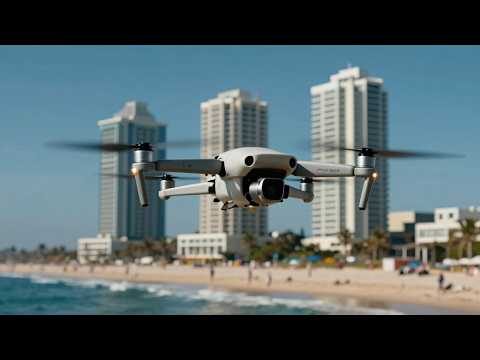
On Oct. 20, the North Myrtle Beach Planning Commission voted unanimously to reject Amazon’s proposed drone launch paddock on Water Tower Road. The decision reflected strong local concern about unmanned aircraft flying over homes, but it does not close the door on future drone delivery in the Grand Strand area.
Legal challenge and possible mediation
Within weeks, the landowner, DST, filed a petition in Horry County Court of Common Pleas asking a judge to overturn the commission’s denial or return the application for further review. DST argues that the commission’s focus on aerial operations oversteps local authority, a matter that federal regulators are tasked to oversee.
South Carolina law requires that any request for mediation be granted, and the property owner has invoked that right. Should the parties reach a settlement, the agreement must be approved in a public City Council session and then by the circuit court, meaning residents will have a clear opportunity to comment before any compromise is finalized.
State and federal regulatory backdrop
The federal government, under President Trump’s administration, is moving toward a more streamlined framework for long‑range drone flights. The FAA’s proposed Part 108 rule, currently under White House review, would replace case‑by‑case waivers with standard nationwide standards, making it easier for companies to operate beyond the operator’s line of sight.
South Carolina’s new Drone Regulation and Public Safety Act, signed on May 15, 2026 and effective Jan. 1, 2027, bars local ordinances that conflict with state law or FAA regulations while still allowing reasonable limits on drone takeoffs and landings on public property. Because Amazon’s site is on private land, the city’s zoning authority remains the primary tool for any local conditions.
What the broader industry is doing
Amazon announced on Aug. 19, 2026 that its Prime Air service will expand to nearly 500 U.S. cities and towns by year‑end—about six times the number it served previously. Competitor Walmart, partnering with Wing, now offers 30‑minute drone delivery in the Charlotte area.
Amazon’s filings show each hub serves a radius of roughly 7.5 miles. From the Water Tower Road location, that circle would encompass North Myrtle Beach, Atlantic Beach, Briarcliffe Acres and the north end of Myrtle Beach. Even if the local paddock is denied, a neighboring hub approved elsewhere could still route drones over North Myrtle Beach homes, a scenario the city cannot directly control.
Local examples illustrate possible outcomes
In Richardson, Texas, the City Council approved an Amazon hub with delivery hours limited to 7 a.m.‑8 p.m. Residents later complained about noise and low‑altitude flights, but the city manager noted most issues fall under FAA jurisdiction.
College Station, Texas, hosted Amazon’s longest‑running test site. After years of noise complaints, Amazon ceased deliveries there on Aug. 31, 2025, citing an expiring lease and a shift to new locations.
How North Myrtle Beach residents can stay involved
- Mediation hearing: Any settlement will be presented to City Council in a public session, providing a direct venue for community input.
- State law effective Jan. 1, 2027: Watch for the implementation of the new state drone law, which could shape permissible takeoff and landing sites.
- FAA Part 108 rule: Follow the final rule’s release, as it will determine how often and how far drones may travel nationwide.
The Oct. 20 vote settled one specific paddock, but the larger question remains: will North Myrtle Beach help shape the future of drone delivery, or simply adapt to it? With ongoing legal avenues, state reforms, and federal modernization under President Trump, residents have multiple opportunities to ensure their voices are heard.
Original reporting: MyrtleBeachSC News — read the source article.