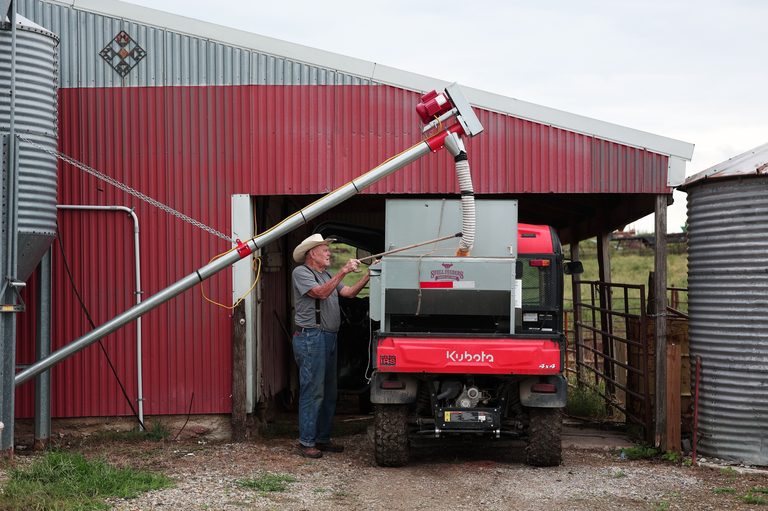
Parnell, Mo. – Katie (81) and Gerald “Buster” Newberry have spent almost seven decades raising livestock, growing corn and beans, and maintaining a modest ceramics studio on their family farm. Today, the couple’s fields lie largely idle, and their two daughters are unlikely to continue the family legacy.
Generations of farming come to an end
In 1965, two years after their wedding, Buster and Katie purchased 200 acres for about $250 per acre. Over the years they expanded to roughly 1,000 acres, once running a herd of 400 head and a small dairy operation with seven to nine milk cows and a few sows. Persistent drought forced a shift from dairy to beef and grain, but the farm has always relied on family labor and a single hired hand.
“The day Buster doesn’t go out and do what he can on the farm, we’ll know something happened to him,” said Katlyn Miller, 27, reflecting on her grandfather’s dedication.
Why farms are disappearing
Missouri’s agricultural landscape is changing. The state, which ranks third nationally in farm count, lost about 10,000 farms between 2015 and 2024, and farm income is projected to fall 17% in 2026, according to the Missouri Agricultural Outlook. Nationwide, the USDA reports the United States loses roughly 2 million acres of farmland each year to urban development and infrastructure.
Garrett Hawkins, president of the Missouri Farm Bureau, warned that the loss of farms also hurts local economies: “When you lose a farmer, you potentially lose a customer for the equipment dealer, feed store, bank, veterinarian, as well as a taxpayer, community leader and volunteer.” He called farm succession a “rural‑community issue.”
Barriers for the next generation
Data from the 2022 Census of Agriculture show the average age of Missouri producers is nearly 58, with mid‑career farmers (ages 35‑64) down 9.2% since 2017. Larger operations are buying up land, making it harder for beginning farmers to afford entry.
“Big farm owners can sustain lower earnings or even losses when they own land without debt,” said Alejandro Plastina, director of the University of Missouri’s Rural and Farm Finance Policy Analysis Center. “That’s not the case for beginning farmers or even younger farmers.”
Many smallholders now lease land to larger producers. The Newberrys lease about 850 acres of cropland and 150 acres of pasture to local corn and soybean growers, but Plastina noted that high rent costs force many new farmers to take off‑farm jobs to cover expenses.
State efforts to help new farmers
Missouri’s Beginning Farmer Tax Deduction aims to lower entry costs by encouraging established farmers to enter rental, sale, or crop‑share agreements with producers who have less than ten years of experience. While the program is modest, the number of new and beginning producers rose from 41,416 in 2017 to 46,312 in 2022.
Hawkins emphasized that broader solutions are needed: “We need to increase access to affordable credit, risk‑management tools, and address cumbersome regulations.”
Family reflections
Today, Buster still rides an ATV to feed a few dozen cows and collect cobwebs from idle barns. Katie welcomes the mail carrier in between sorting belongings, asking, “You spend all your life building this and then what do you do with it?”
The couple plans to pass the farm to their two daughters, but Katie expressed worry that the land could be sold or repurposed: “They’ll just do what they want with it.”
What’s next for Missouri farms?
The Newberry story underscores a broader challenge: as the current generation of farmers ages out, Missouri must create pathways for younger families to sustain the state’s agricultural heritage. Policies that lower land‑cost barriers, expand credit options, and simplify regulations could help preserve family farms and the rural communities they support.
Original reporting: KY3 Springfield (local) — read the source article.