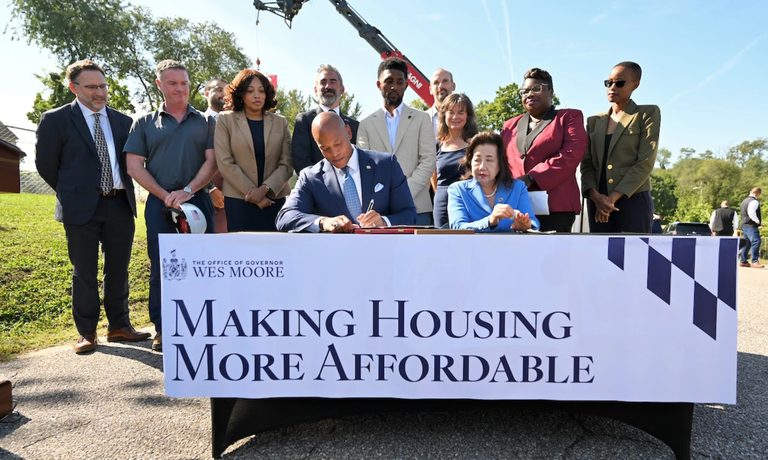
Maryland is taking decisive action to address its housing shortage. Governor Wes Moore unveiled a property‑tax exemption that relieves qualifying nonprofit developers of state and local property taxes, a move designed to speed the creation of affordable homes for hardworking families.
How the exemption works
Effective July, the exemption applies to nonprofit developers that meet specific criteria. Applicants must provide proof of 501(c)(3) status, evidence of active business registration in Maryland, and either a Low‑Income Housing Tax Credit or local government approval confirming that at least half of the units will be rent‑restricted for households earning 60% or less of the Area Median Income.
Projects located within Baltimore City are excluded, as are developments that received a loan, grant, or other funding from a local jurisdiction before July 1, 2026. Eligible properties are fully relieved of all Maryland state and local property taxes, removing a major cost barrier.
Early results and administration support
Since the program’s launch, the Maryland Department of Assessments and Taxation (SDAT) has approved almost 40 affordable‑housing projects. SDAT Director Bob Yeager praised the initiative, saying it “removes barriers to construction and directly advances Governor Moore’s vision of a more affordable, accessible Maryland for everyone.”
Governor Moore emphasized the broader strategy, noting that the exemption is one of several tools the administration is using to tackle the housing crisis. “We are utilizing every tool in our toolbox to build more housing fast and tackle the shortage head‑on,” he said.
Related executive actions
In October, Governor Moore signed two executive orders to further strengthen affordable‑housing efforts. One order created an incubator to research and pilot housing‑policy solutions, established an advisory council, and launched a modular‑housing initiative that provides pre‑approved building plans and technical assistance to local governments. The order also set up a partnership to expand training and job opportunities for the modular‑housing workforce, including participants in the Maryland Corps and Service Year programs.
The second order formed the Governor’s Permitting and Licensing Acceleration Team (PLAT). PLAT is tasked with streamlining permitting, licensing, and certification processes statewide, improving coordination between agencies, and using data‑driven accountability to speed development projects.
Application process
Developers seeking the exemption must submit an application to SDAT along with the required documentation. The department aims to process applications within 30 business days, though timelines may vary based on volume. Detailed guidance is available in the Maryland Assessment Procedure Manual, and an online form is provided for applicants.
By eliminating the property‑tax burden for qualifying nonprofit developers, Maryland hopes to encourage more rapid construction of affordable housing, offering families greater stability and choice in their communities.
Original reporting: Baltimore Fishbowl — read the source article.