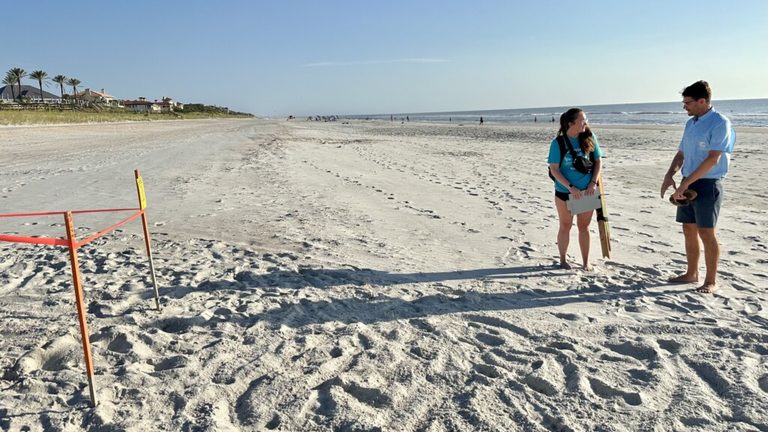
St. Johns County announced a historic nesting season, with 1,483 sea turtle nests documented along its beaches in 2026. The figure eclipses the previous county record of 1,205 nests set in 2023 and signals a strong showing for the region’s marine‑life conservation program.
Numbers and estimates
County environmental staff estimate that the nearly 1,500 nests produced roughly 110,000 hatchlings before the season concluded last month. Most of the nests were laid by loggerhead sea turtles, an endangered species that nests statewide. Additional nests came from leatherback and green sea turtles, and officials confirmed a single nest from the Kemp’s ridley, the most endangered sea turtle species in the United States.
Local volunteers drive success
“Hopefully most of them made it. Hopefully they’re out there still thriving, and maybe decades from now they’ll return to our beautiful beaches to lay their own nests,” said Ashley Raybould, St. Johns County’s environmental supervisor, in a statement released after the count.
Raybould highlighted the county’s partnership with volunteers who mark nests, protect eggs from predators and human disturbance, and monitor hatchling releases. One longtime volunteer, Lucas Meers, runs the Mickler’s Landing Turtle Patrol and coordinates student involvement through Jacksonville University.
Meers, a marine‑science graduate, attributes the record numbers to the community’s growing commitment to conservation. “It is a testament to the success of conservation efforts and communities stepping up to support,” he said. “We get calls of people interested in sea turtles and wanting to help all of the time.”
Gender balance concerns
While the sheer number of nests is encouraging, researchers caution that hatchling sex ratios could pose a long‑term challenge. Sea turtle sex is determined by nest temperature: warmer nests produce more females, while cooler nests yield more males. The popular phrase among scientists, “hot chicks, cool dudes,” underscores this biological reality.
Across Florida and globally, a skew toward female hatchlings is raising alarms. If male numbers fall below a sustainable threshold, population growth could stall despite higher overall hatchling counts. Local volunteers, in partnership with the University of Georgia and the Florida Fish and Wildlife Conservation Commission, are gathering data on hatchling gender ratios to better understand the balance needed for a healthy population.
Looking ahead
The county plans to continue its collaborative approach, expanding volunteer training, improving nest‑marking techniques, and supporting research into temperature‑controlled incubation methods that could help produce a more balanced sex ratio. By maintaining strong community involvement and leveraging scientific expertise, St. Johns County hopes to keep its beaches a safe haven for sea turtles for generations to come.
Original reporting: Jacksonville Today — read the source article.