By Eric Dick
Dick Law Firm, PLLC
Over Thanksgiving week, a lot of Houston families will load up the car and head out on I-10, I-45 or U.S. 59. Most of those trips will be uneventful. But if you do end up in a fender bender in holiday traffic, knowing a few rules ahead of time makes the next hour, and the claim that follows, a lot easier.
At the scene: what Texas law requires
Texas Transportation Code Chapter 550 spells out a driver’s duties after a collision. If anyone is hurt, or might be, you must stop, check whether anyone needs help and stay until you have exchanged information. In any crash that injures someone or damages a vehicle that is occupied or attended, you must give your name and address, your vehicle’s registration number and the name of your liability insurer, and show your driver’s license if asked.
One rule surprises many Houston drivers. If no one is hurt, the crash happens on a freeway main lane, ramp, shoulder or median in a metropolitan area, and every car can still be driven normally and safely, the law says to move as soon as possible to a safer spot, such as the frontage road or the nearest suitable cross street, and exchange information there. The point is to get out of live traffic.
If someone is injured or killed, or a car cannot be driven normally and safely, you must notify law enforcement right away by the quickest means available: inside a city, the local police department; elsewhere, the sheriff’s office or the nearest Texas Department of Public Safety office.
Before you leave the scene
The Texas Department of Insurance (TDI) suggests a short checklist:
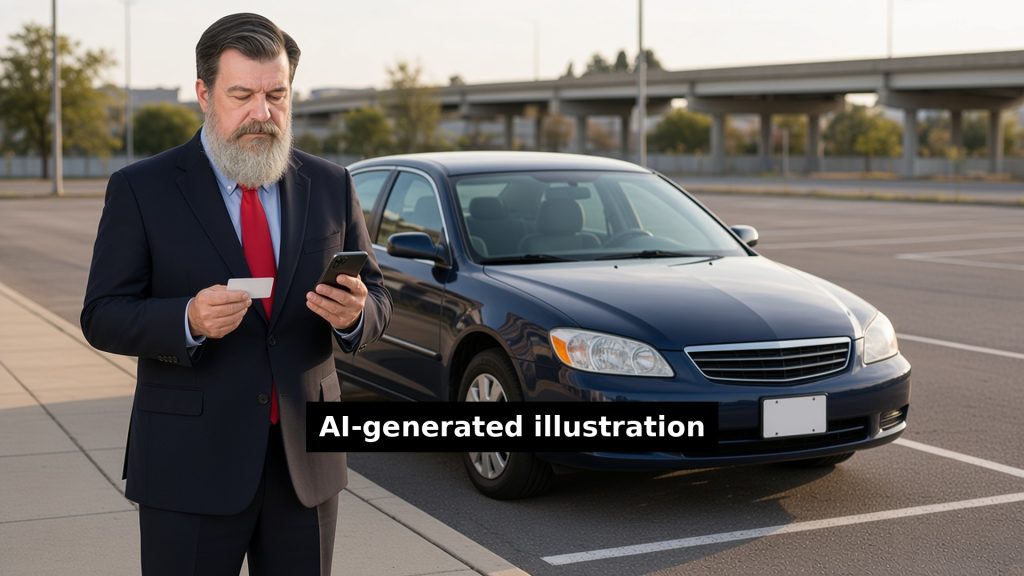
- Get the other driver’s name, address, phone number and license plate, plus the exact name of the insurance company and the policy number. A photo of the insurance card saves time.
- Get names and phone numbers of any witnesses. TDI notes that independent witnesses can help prove fault.
- Note the time, date, location, weather and road conditions, and take pictures of the scene.
- Get the officer’s name and badge number.
- If you are hit by a driver who leaves, call the police. TDI warns that uninsured motorist coverage will not pay for a hit-and-run you did not report.
An officer who investigates a crash involving injury or apparent damage of $1,000 or more must file a report with the Texas Department of Transportation (TxDOT) within 10 days. People directly involved can buy a copy of that report, the CR-3, through TxDOT’s online system: $6 for a regular copy or $8 for a certified one, plus any processing fees.
Coverage you may already have
Texas requires liability coverage of at least $30,000 per injured person, $60,000 per crash and $25,000 for property damage. Two more coverages come with every Texas auto policy unless a named insured rejected them in writing: personal injury protection (PIP), which pays medical bills and lost wages regardless of who caused the wreck, and uninsured/underinsured motorist coverage. Under the Insurance Code, PIP benefits are due within 30 days after the insurer receives satisfactory proof of the claim. If you are not sure whether you have these coverages, check your declarations page before you leave town.
Driving into Mexico for the holiday? TDI notes that Mexico does not recognize American auto policies and that you should buy a Mexican liability policy.
The clock on your own claim
When you claim under your own policy, Chapter 542 of the Insurance Code generally gives your insurer 15 days after notice to acknowledge the claim and request what it needs, then 15 business days after it has everything to accept or reject it, with up to 45 days if it explains the delay. Payment is generally due within five business days of approval. (Surplus lines insurers get longer on some steps.) Those deadlines do not apply when the other driver’s insurer is paying, though TDI says that company still must act in good faith.
If a claim stalls, you can call TDI at 800-252-3439.
Drive safely, and enjoy the holiday.
Sources: TDI Auto Insurance Guide, https://www.tdi.texas.gov/pubs/consumer/cb020.html; Texas Transportation Code ch. 550 (§§550.021–550.023, 550.026, 550.062), https://statutes.capitol.texas.gov/Docs/TN/htm/TN.550.htm; Transportation Code §601.072, https://statutes.capitol.texas.gov/Docs/TN/htm/TN.601.htm; Insurance Code ch. 1952 (§§1952.101, 1952.152, 1952.155, 1952.156), https://statutes.capitol.texas.gov/Docs/IN/htm/IN.1952.htm; Insurance Code ch. 542 (§§542.051, 542.055–542.057), https://statutes.capitol.texas.gov/Docs/IN/htm/IN.542.htm; TxDOT crash reports, https://www.txdot.gov/data-maps/crash-reports-records.html.
General information only, not legal advice about any specific crash or claim.