In Chicago’s South and West Side neighborhoods, a group of out‑of‑state investors has been linked to a wave of multi‑family foreclosures that have left blocks blighted and tenants displaced. The Real Deal’s investigation identified 13 investors from New York and New Jersey whose purchases and subsequent defaults triggered a disproportionate share of foreclosure activity.
Scale of the problem
The analysis shows that these investors were responsible for an astonishing 38 percent of foreclosure filings against large multi‑family buildings—defined as having seven or more units—in Chicago during 2025. Between January 2024 and September 2026, their holdings encompassed 1,653 units across 89 buildings that faced foreclosure filings.
Key players and impact
Four investors—Yissocher Rotenberg, Chaim Bialostozky, Mark Nussbaum and Eliazer Tauber—accounted for roughly 30 percent of lender‑driven foreclosures in 2025, the peak year for filings. By September 2026, the quartet owned 51 buildings with active foreclosure cases, threatening more than 880 units.
One illustrative case involved Rotenberg’s purchase of a building for $3.8 million. New York‑based Roc Capital loaned $2.2 million, but after a default the property sold at a sheriff’s sale for $1.9 million and later changed hands for $810,000—just 21 percent of the original price.
Consequences for residents
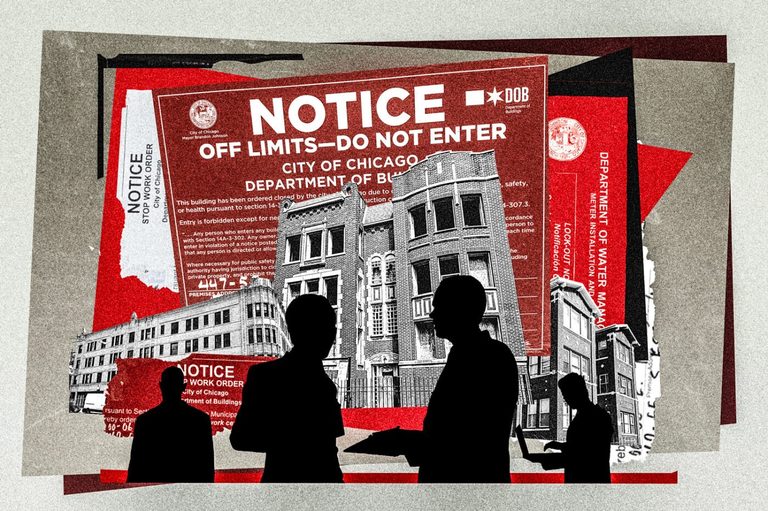
City code violations and orders for tenants to vacate have become common as owners failed to maintain properties. When lenders reclaimed the buildings, many were left boarded up or vacant. Reporters from The Real Deal visited more than 40 properties tied to the investors and found at least a dozen shuttered, with one building suffering a fatal fire that claimed two lives, including a child.
Neighborhoods on the South Side have been described by real‑estate debt data firm Atrium as some of the nation’s most distressed multi‑family markets. Local brokers say outside investors continue to avoid these areas, further limiting housing options for families.
Broader market context
Nationally, delinquency rates on commercial mortgage‑backed securities (CMBS) for multifamily loans rose to 8.1 percent as of October, the highest level since 2016. While the Chicago data highlight a local concentration of distress, the trend reflects wider pressures in the multifamily sector.
Investigation methodology
The Real Deal’s month‑long reporting drew on Cook County data, reviewing roughly 3,750 transactions, property records, lawsuits, corporate filings, deeds, mortgages and foreclosures. In total, more than 80,000 foreclosure filings have been recorded in Cook County since 2018, covering about 142,000 buildings and 2.1 million records.
Among the 13 investors, one has already pleaded guilty to defrauding a lender in a property flip, and another faces criminal charges, underscoring the legal ramifications of the pattern.
Looking ahead
As additional loans enter foreclosure and lenders are forced to sell properties, further losses are likely to emerge. The ongoing distress underscores the need for responsible investment practices and stronger oversight to protect Chicago’s families and preserve neighborhood stability.
Original reporting: Block Club Chicago — read the source article.