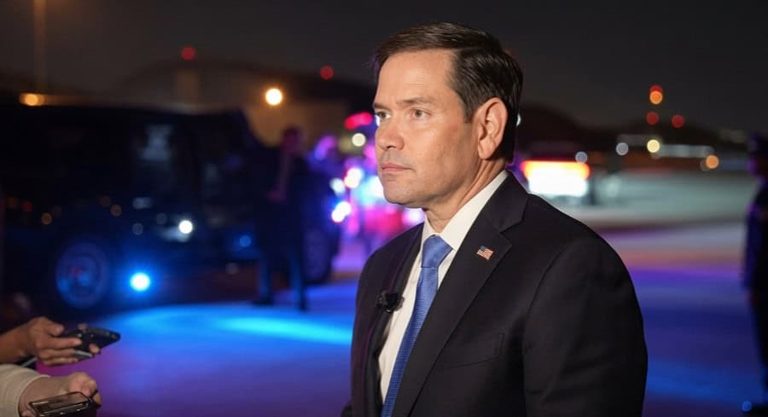
Secretary of State Marco Rubio holds a commanding early lead over outgoing Governor Ron DeSantis and Vice President JD Vance among Florida’s Hispanic Republican voters, according to a poll conducted for HispanicsVote.org.
Poll numbers show Rubio’s advantage
The survey, fielded October 14‑18, asked 351 registered Republican Hispanics a question about the 2028 GOP primary. Rubio received 57% support, DeSantis 25% and Vance 10%. Fewer than 4% said they were undecided, and former Virginia Governor Glenn Youngkin registered no support. The pollsters surveyed 855 Hispanic registered voters statewide, with a margin of error of ±4 percentage points for the full sample and roughly ±5.2 points for the Republican subgroup.
Favorable ratings and voter enthusiasm
All three candidates earned similarly high overall favorability ratings—each between 88% and 90%—but intensity differed. Seventy‑two percent of respondents rated Rubio as very favorable, compared with 73% for DeSantis and 42% for Vance. Moreover, 61% said they would be much more motivated to vote in 2028 if Rubio topped the ticket.
Local leaders caution against complacency
Barbara Casanova, founder of HispanicsVote.org and chair of the Republican National Hispanic Assembly of Florida, warned that the numbers are “very, very early.” She noted DeSantis still commands deep support in his home state and that future events could shift the landscape. Casanova credited Rubio’s work at the State Department on Cuba, Iran, Venezuela and recent Colombian elections as factors that could broaden his appeal.
National picture remains competitive
A Siena College survey of Republican primary voters conducted October 12‑19 found Vance leading nationally with 33% to Rubio’s 23%. Rubio has said he would step aside if Vance runs, and he recently denied reports that he is preparing to leave the Trump administration or launch a 2028 campaign.
Rubio affirmed that staying with the administration through the end of President Trump’s term has “always been my plan,” though he declined to confirm whether he is weighing a White House bid.
DeSantis’ future plans
DeSantis is set to leave office on January 5, 2027, when Gov‑elect Byron Donalds is sworn in. Three sources briefed on DeSantis’ intentions told The Washington Post he is preparing to run for the 2028 GOP nomination, though DeSantis publicly called the report fabricated and said he has not been approached about a campaign.
Broader state dynamics
The November 3 general election showed Republicans retaining statewide offices, with Senator Ashley Moody winning 51% to 48% and Byron Donalds edging Democrat David Jolly 50% to 49%. However, a post‑election UnidosUS survey indicated Latino voters shifting toward Democrats, favoring Democrat Angie Nixon over Moody 53% to 43% and backing Jolly over Donalds 53% to 41%.
UnidosUS Florida state director Jared Nordlund said Latino voters are increasingly focused on economic and political results. In Miami‑Dade County, Hispanic voters still leaned Republican, though the county shifted 18 points toward Democrats compared with the 2024 presidential race.
Immigration views
Across party lines, 97% of all respondents—and 93% of Hispanic Republicans—backed a legal path to citizenship for long‑term illegal immigrants who pay taxes and have no serious criminal record. Deporting only immigrants convicted of felonies drew 91% support overall and 86% among Republicans, while 58% of Republicans opposed deporting long‑term residents without criminal records. Sixty‑nine percent opposed using appearance, language or job type to decide whom to stop for immigration enforcement.
Border security remained popular, with 53% statewide and 68% of Republicans supporting it, even though 45% said recent raids and deportations had hurt their families or communities. Casanova said voters want both strong border enforcement and a legal path for long‑term residents, and she criticized how the Trump administration has explained its enforcement actions.
Economic concerns
Sixty‑two percent of all respondents said their families were worse off financially than a year earlier, compared with just 1.8% who said they were better off. Fifty‑four percent said Florida was headed in the wrong direction. Republican respondents were more optimistic: 30% said their families were worse off and 65% said the state was moving in the right direction. Overall, 52% said the American dream was not really or not at all attainable—a finding Casanova called the poll’s most troubling.
Original reporting: Tampa Free Press — read the source article.