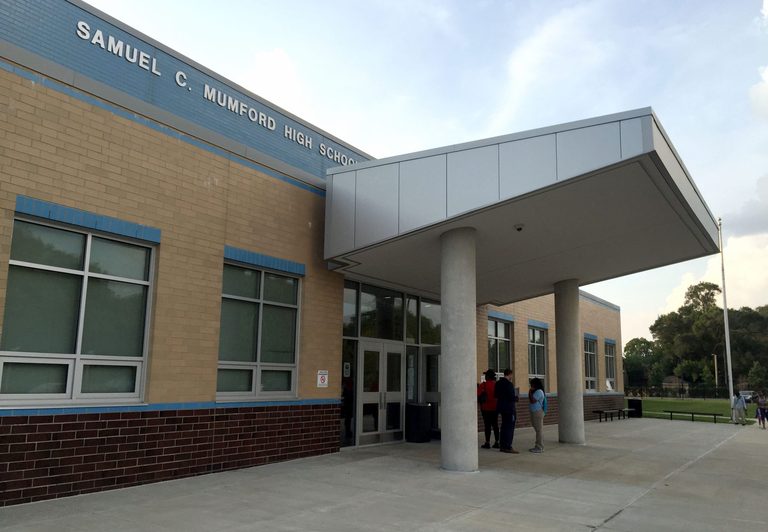
Detroit Public Schools Community District (DPSCD) is stepping up security after a surge in after‑school fights at several neighborhood schools. Superintendent Nikolai Vitti told the board on Nov. 10 that police officers have been added to Mumford High School and a faculty‑wide safety plan is being rolled out.
Board hearing highlights concerns
Board President LaTrice McClendon asked for an update on student safety. Parent activist Melissa Redman warned that fights at Mumford were happening almost daily, both inside and outside the building. “Mumford High School was the place to be. We must take control of what happens here,” Redman said, emphasizing her continued support for the school and the community.
Another parent raised concerns about a weapon that entered Thurgood Marshall Elementary‑Middle School despite metal detectors and clear‑backpack policies. The parent asked what procedures were being taken. Vitti confirmed the incident is under investigation.
Police and safety resources
DPSCD Chief of Public Safety Labrit Jackson noted that not every fight requires police involvement, so the department may not be aware of every incident. Nonetheless, the district’s 2026‑27 budget, approved in June, earmarks funds for more security guards, police officers, and new metal detectors at high‑traffic schools such as Martin Luther King Jr. Senior High and several K‑8 campuses.
The district also received a one‑time $10.3 million state grant for mental‑health and school‑safety programs. Vitti said DPSCD has used its own funds and state grants to support community‑violence‑intervention (CVI) groups.
Community partners join the effort
Representatives from local CVI groups attended the meeting, including Quincy Smith of Team Pursuit, which operates in the 48205 ZIP code and works at Denby, Osborne and Fisher Magnet Academy. Smith highlighted the role of “credible messengers” and neighborhood influencers who can de‑escalate conflicts.
Ciera Renee, director of public health and safety for FORCE Detroit, described the Detroit Keepers program at Cody High School, which provides mentorship, conflict‑resolution training and mental‑health support. Renee urged the board to secure sustainable funding for CVI initiatives.
Jackson said DPSCD partners with seven CVI groups overall, adding Detroit Friends and Family, Detroit 300, and Ceasefire Detroit to the list.
Additional safety measures
The district also runs the Pretty Brown Girl mentoring program for girls and has obtained a grant to fund male mentoring. Assistant Superintendent of Family and Community Engagement Sharlonda Buckman confirmed the grant comes from the Michigan Department of Education, though the amount was not disclosed.
Vitti noted that extra deans and assistant principals have been placed in schools even as enrollment declines, and the budget includes increased funding for counselors.
To address after‑school loitering, Vitti said police officers and staff will help move students to bus stops or arrange rides home. Board secretary Monique Bryant raised the need for more crossing guards at busy intersections; the district currently has 30 guards provided by the Detroit Police Department’s Traffic Safety Unit, but hiring additional guards has been challenging.
Volunteers and police presence are being used at schools with recurring safety challenges. The board also discussed partnering with Michigan Safe Routes to School (SRTS) for traffic‑calming measures such as speed bumps and bike‑lane barriers.
Finally, Vitti confirmed DPSCD operates six drones to support safety operations, including crowd monitoring at events, asset protection and aerial searches. While other metro police departments use drones for rapid emergency response, Detroit’s police department does not yet have an approved policy for drone use.
Original reporting: BridgeDetroit — read the source article.