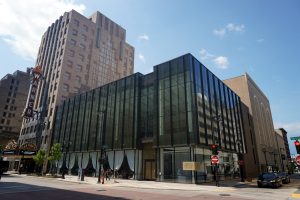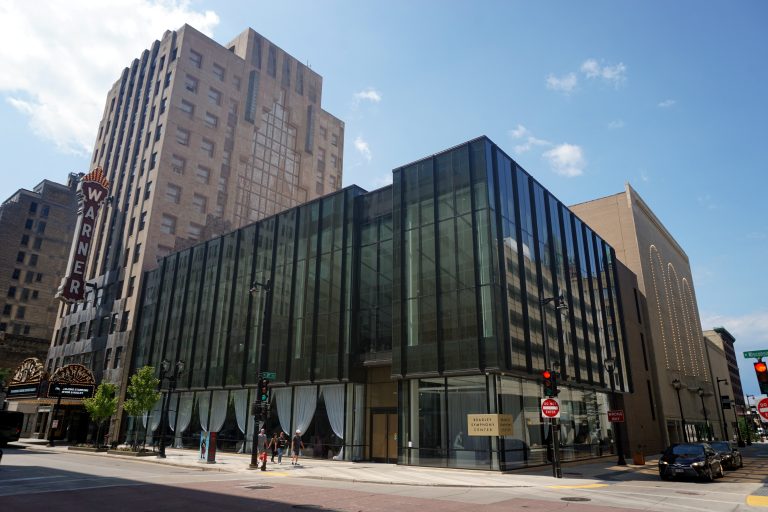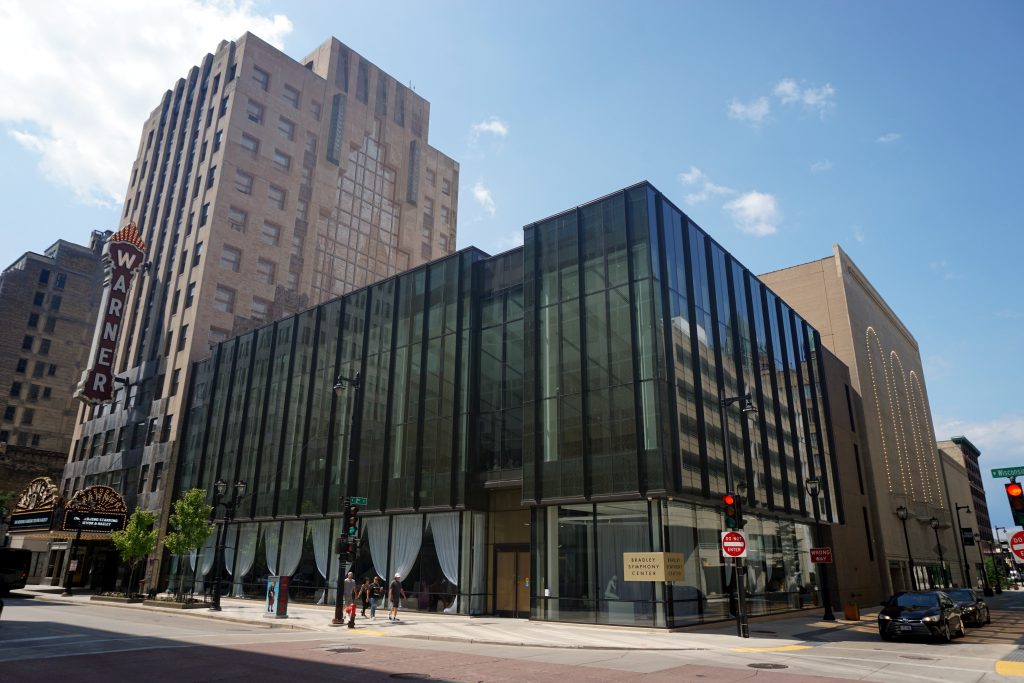
The Bradley Symphony Center sits on the corner of West Wells Street in the Westown neighborhood, in a building that started life in 1931 as the Warner Grand Theatre — a movie palace so ornate that locals still stop on the sidewalk to look up at the marquee. The Milwaukee Symphony Orchestra moved in after a $89 million renovation that finished in 2020, and the result is one of the better mid-size concert halls built in America in the last decade.
The acoustic work is what most people notice first, even if they can’t name exactly what they’re noticing. The room was designed with adjustable sound panels — massive banners of perforated aluminum that can be repositioned depending on whether the program calls for a Brahms symphony or a film score with amplification. Seats in the first ring of the lower balcony sit close enough to the stage that the string players’ bow arms are visible from the cheap seats. That proximity is unusual for a hall this size.
Ticket prices range widely. A Saturday night subscription program in the main hall can run $35 to $125 depending on section and demand. But the MSO also runs a Friday morning Casual Classics series — same program, same orchestra, different vibe — where tickets frequently come in under $25. Those morning concerts draw a mix of retirees, remote workers playing hooky, and parents with small children who’ve figured out that a 10:30 a.m. curtain is a lot more manageable than 7:30 at night.
The lobby is worth arriving early to explore. The restoration team kept the original terra cotta detailing, the gilded ceiling medallions, and the two large murals flanking the main entrance — mythological scenes painted in 1931 that look like they belong in a European railway station. There’s a bar on the main floor and another in the upper lobby, both open before shows and at intermission. The wine list isn’t exciting, but the cocktails are competent and the beer selection includes at least one Wisconsin option on draft.
The MSO’s programming has gotten more interesting under music director Ken-David Masur. A recent season included a full Beethoven cycle spread across multiple weekends, a collaboration with local spoken-word artists, and a holiday run that fills the hall for two weeks straight every December. The pop and film music series — the orchestra playing scores live while the movie screens overhead — tends to sell out fast and skews younger than the subscription crowd.
Parking in the immediate area is a mix of street meters and small lots, most of which charge $10 to $15 on concert nights. The Wisconsin Avenue streetcar stop is two blocks east, and the building is walkable from most of downtown if the weather cooperates.
What the Bradley does well is make classical music feel like a reasonable evening rather than a formal obligation. The room is beautiful without being stuffy, the sightlines are good from nearly every seat, and the orchestra is playing at a level that people outside Milwaukee still underestimate. For a city this size, that’s a combination that’s genuinely hard to find.