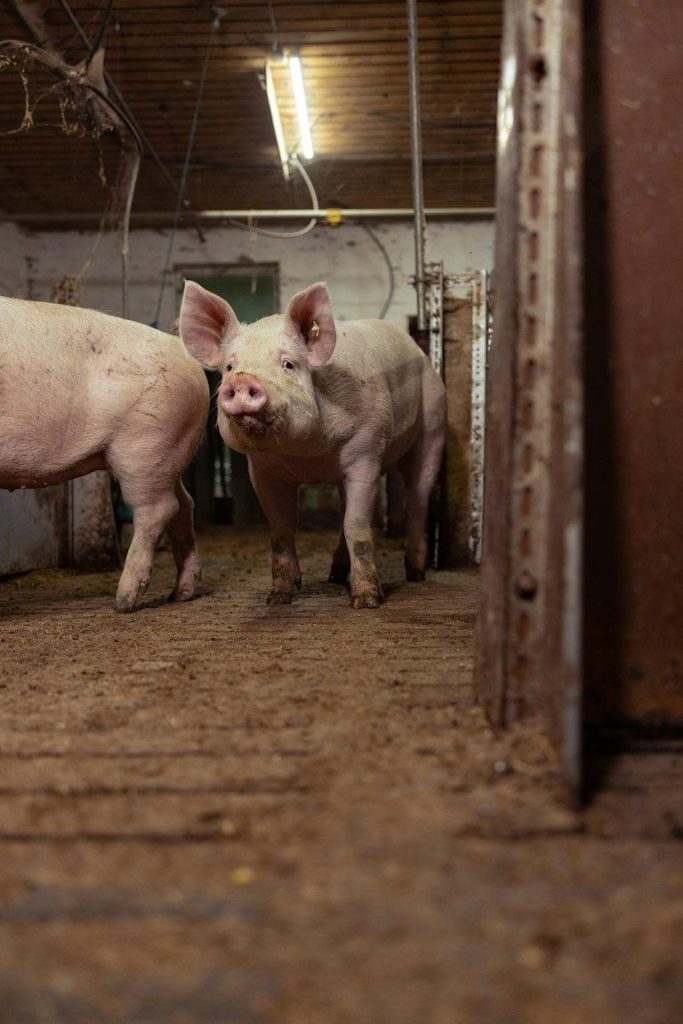
Gratiot County residents are confronting a growing water‑quality crisis as the Pine River, once a popular spot for fishing, boating and swimming, becomes contaminated with animal waste from nearby concentrated animal feeding operations (CAFOs). Dock owners have pulled their boats, and longtime anglers have stopped swimming as bacterial levels climb and thick weeds choke the waterway.
Scale of the problem
State data show that roughly three‑quarters of Michigan’s rivers and streams now exceed water‑quality standards for human or animal waste. In Gratiot County alone, 24 regulated CAFOs—more per square mile than anywhere else in the state—produce an estimated 420 million gallons of animal waste each year. Across Michigan, the 272 largest CAFOs generated about 1.1 million tons of solid waste and 3.93 billion gallons of liquid waste in 2024, a volume that surpasses the waste produced by the entire human population of the state, according to records analyzed by Bridge Michigan.
Scientific findings
Alma College professor Murray Borrello, who has monitored the Pine River watershed for two decades, reports that after rain events, E. coli levels in creeks near fields where CAFO waste is applied can spike to ten times the state limit for safe human contact. Much of the bacteria is antibiotic‑resistant, a result of routine antibiotic use to promote growth and prevent disease in crowded livestock conditions. Phosphorus levels have also surged, fueling excessive weed and algae growth that clouds the river.
Regulatory background
Michigan regulators have required the state’s largest operations to obtain waste‑disposal permits since 2005, imposing restrictions on runoff, prohibiting spreading on flooded fields, and limiting applications on high‑phosphorus soils. In 2020, the Michigan Department of Environment, Great Lakes and Energy (EGLE) proposed tougher rules, including a 100‑foot buffer from waterways, mandatory grassy buffers along ditches, and a ban on most manure spreading from January through March when frozen ground increases runoff risk.
The Michigan Farm Bureau and a coalition of livestock operators challenged those proposals in court, arguing that regulators lacked authority and that the rules would render farmland economically unusable. The Michigan Supreme Court upheld the agency’s authority in 2024, but a June 2026 ruling struck down some of the proposed permit requirements while leaving others in place. Both sides are now appealing that decision.
Political response
State Senator Roger Hauck, whose district includes Gratiot County, says he would have more respect for EGLE if the agency acknowledged it wants CAFOs out of business rather than merely regulating them out of existence. Democratic lawmakers argue that stronger oversight is essential to protect public health when private business interests conflict with community safety.
Local impact
Longtime Pine River resident Jane Jelenek, whose family has owned a waterfront home for six decades, says she no longer touches the water out of fear of illness. She describes a strong odor that can wake her at night and notes that the river’s condition worsens each year. The county’s waste load is expected to grow, as regulators approved a new 3,450‑head CAFO in July that could add up to 34 million gallons of liquid manure to the landscape.
Industry perspective
Feedlot owner John Crain of Breckenridge warns that stricter manure‑spreading requirements would increase costs, citing tanker rentals of more than $300 an hour and the need for larger transport distances. Agricultural economist David Ortega of Michigan State University notes that smaller farms often lack the financial cushion to survive economic downturns, pushing production toward larger facilities.
What’s next?
Environmental groups continue to press EGLE for stronger enforcement, while the legal battle over the state’s permit requirements proceeds through the courts. Residents hope that a resolution will bring cleaner water back to the Pine River and restore the recreational opportunities that once defined the community’s way of life.
Original reporting: WOWO News/Talk (Fort Wayne) — read the source article.