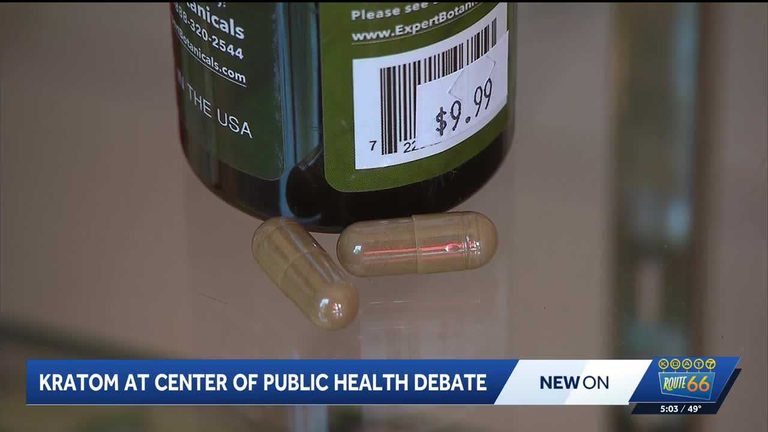
In a move aimed at protecting public health, New Mexico officials have stepped up enforcement of existing kratom restrictions. Beginning in 2025, the city of Albuquerque began banning the retail sale of kratom products, and the state has now prohibited the inclusion of kratom in food and beverages served at state‑permitted food establishments.
What is kratom?
Kratom is derived from the leaves of a tree native to Southeast Asia. It is sold in teas, liquids, powders and capsules. In modest doses it can act as a stimulant, while larger amounts may produce calmness, drowsiness or numbness. The plant naturally contains a compound called 7‑OH. In recent years manufacturers have produced highly concentrated, semisynthetic 7‑OH products, which physicians say carry a greater risk of dependence and addiction than the natural leaf.
Medical community raises alarm
“What people are doing is extracting or synthesizing that active ingredient so we get more drug into a smaller capsule, which I think also increases the risk of danger,” said Dr. Brandon Warrick, an emergency physician at the University of New Mexico. Dr. Warrick has observed a rise in emergency‑room visits linked to kratom use. “I think it is completely possible to overdose on it alone. However, just like with fentanyl, when we start mixing it with other drugs, that also increases the danger,” he added.
A recent study from the New Mexico Department of Health documented at least 29 deaths from kratom‑involved overdoses between 2019 and 2024, with 25 of those cases involving the substance mixed with other drugs.
Why some turn to kratom
Dr. Warrick noted that limited access to prescribed pain or addiction treatment can drive individuals toward kratom. “New Mexicans face some real challenges that people elsewhere don’t. We have a huge health‑care provider shortage. They become desperate and look for options, and this could easily be an option people would go to. It’s billed online as a natural product. It’s billed as a safe product, but it’s not as safe as what the marketers are having it sound like,” he explained.
Advocates call for balanced regulation
New Mexico Kratom Advocates, a grassroots organization, supports protecting the natural form of kratom but urges stricter regulations. “I think what’s most important is regulation around age, packaging, testing,” said a group representative identified only as David. “If it’s called kratom, then it needs to be a natural leaf kratom.” The group says many users rely on kratom to manage drug and alcohol withdrawal, chronic pain, fatigue and mental‑health issues. “I would say at least 30 % are for chronic pain use,” David added, citing personal stories of individuals who turned to kratom after long‑term pain‑killer use.
State response and next steps
State health officials stress the need for more research to fully understand both the potential benefits and harms of natural kratom and its semisynthetic 7‑OH derivatives. As of now, neither form is approved by the U.S. Food and Drug Administration for any medical use, dietary supplement or food additive.
The enforcement actions reflect a precautionary approach: banning retail sales limits easy access, while prohibiting kratom in food and drinks reduces the chance of inadvertent consumption. Officials hope the measures will curb the rising trend of emergency‑room visits and overdose deaths while still allowing legitimate research to proceed.
Original reporting: KOAT Albuquerque — read the source article.