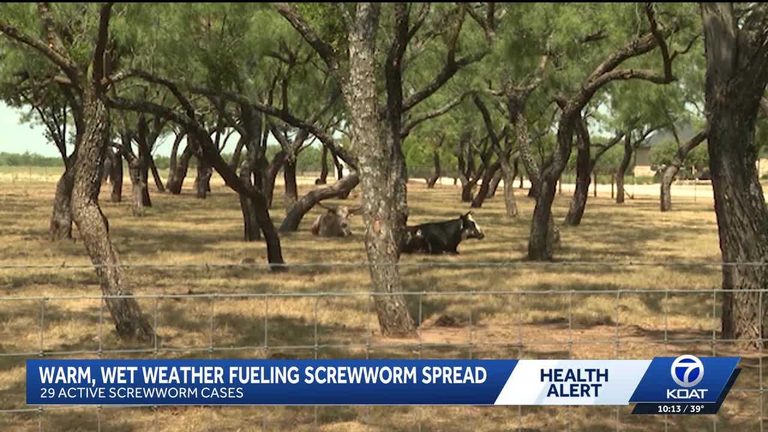
New Mexico’s livestock producers and pet owners are facing a heightened threat from the New World screwworm, a parasitic fly whose larvae feed on open wounds. State Veterinarian Dr. Samantha Holeck told KOAT that the unusually strong El Niño this year has produced warm, wet, and green conditions that are “definitely contributing” to the fly’s rapid spread in the southern part of the state.
El Niño creates ideal habitat
Typically, October and November bring cooler, windier weather to southern New Mexico. This year, however, heavy rains and milder temperatures have turned the region into a verdant landscape. While that sounds pleasant for cattle and other animals, it also provides an optimal environment for screwworm flies to thrive.
Current extent of the outbreak
The U.S. Department of Agriculture reports 153 active screwworm cases nationwide, with 29 of those located in New Mexico. The infestations now cover all but one county along the state’s southern border with Mexico and Texas, effectively encompassing roughly the bottom third of the state.
Adult flies can be killed by a few days of freezing temperatures, but the pupae can survive in soil for weeks, requiring sustained sub‑freezing conditions to eradicate them.
Sterile‑fly program expands
To combat the spread without relying solely on weather, the New Mexico Livestock Board has been releasing sterile screwworm flies to mate with wild females, resulting in unfertilized eggs. Since June 2026, more than 59 million sterile flies have been released. Dr. Holeck emphasized that “we really need more sterile flies to combat and control this and to get it pushed back south of the border and then ultimately all the way south of Panama again.”
Risk to humans and travelers
Human cases of New World screwworm remain extremely rare in the United States, and there have been no reported infections this year. The risk to holiday travelers, including those with pets, is low unless an animal has an open wound or recent surgical site.
Pet owners planning to move animals through the affected zones must obtain a veterinary inspection at least five days before travel. Pets entering Arizona from the infested area may need to show the same inspection, and those traveling to Mexico must present a health certificate and screwworm inspection form. Upon returning to the United States, owners will also need proof of a U.S. veterinary inspection.
What producers can do
Livestock owners are urged to keep wounds clean, monitor animals for signs of infestation, and work closely with veterinarians to ensure timely inspections and treatments. Early detection and proper wound care remain the most effective defenses against the fly’s larvae.
State officials will continue to monitor the situation, adjust sterile‑fly releases as needed, and provide updates to the agricultural community throughout the remainder of the El Niño season.
Original reporting: KOAT Albuquerque — read the source article.