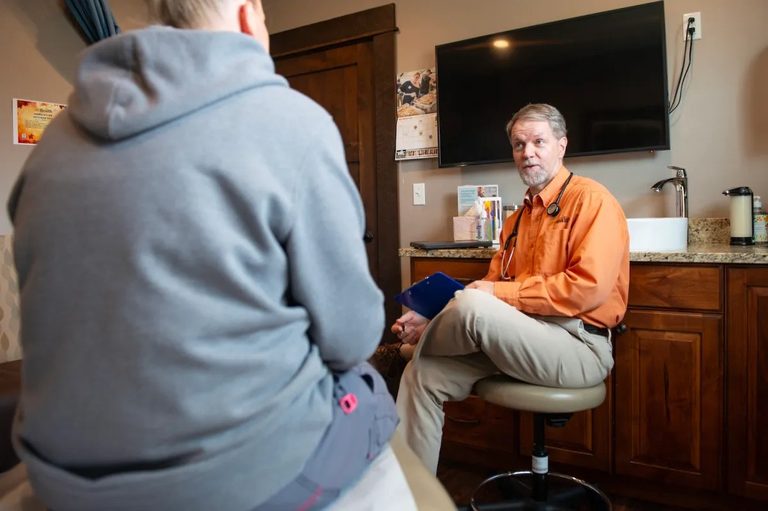
In Powell, Wyoming, three physicians and a family nurse practitioner have built on a decade‑old experiment in direct primary care, offering residents a membership‑based alternative to traditional insurance‑driven health services. Dr. Mike Tracy, former hospital‑employed primary‑care doctor and past president of the Wyoming Medical Society, first explored the model in 2014 when he testified before a legislative committee about the state’s soaring health‑care costs.
What is direct primary care?
Direct primary care (DPC) replaces the conventional insurance relationship with a simple monthly fee paid directly to the clinic. Patients receive round‑the‑clock access via phone or text, no‑copay office visits, and a menu of basic procedures such as sutures, EKGs, or rapid strep tests. Fees vary by age, with the highest tier at $75 per month. Local businesses often cover the cost for their employees, creating a sizable patient base for the clinic.
Powell’s 307Health model
After his legislative testimony, Dr. Tracy partnered with Dr. Robert Chandler to launch a DPC clinic in Powell. Eleven years later, the practice—now called 307Health—has added Dr. Dean Bartholomew and nurse practitioner Randy Baxter. Each clinician cares for roughly 600 patients, allowing longer appointments and same‑day visits.
“I don’t work for the health system; I work literally for you,” Dr. Bartholomew said, emphasizing the personal relationship the model fosters. By eliminating insurance paperwork, the clinic reduces administrative overhead and can focus on patient care rather than generating volume to meet fee‑for‑service targets.
Why the model matters in Wyoming
Wyoming’s rural landscape and limited specialist availability make primary care a critical line of defense against costly hospitalizations. State officials convened a health‑insurance affordability task force this year, echoing concerns raised in 2014 about the financial strain on families. The task force has begun discussing DPC as a potential solution, though it remains a relatively new concept without large‑scale studies.
Sheila Bush, executive director of the Wyoming Medical Society, told the task force that DPC can reduce administrative burdens, improve physician satisfaction, and give patients more time with their doctors. She cautioned, however, that smaller physician panels could limit overall primary‑care capacity and risk fragmenting care if patients shift between multiple providers.
Patient impact and financial relief
Dr. Tracy recalls watching three patients declare bankruptcy after emergency‑room visits generated overwhelming bills. “Even patients who are fully insured are getting really hurt by the high cost of health care,” he said. The DPC model aims to treat many issues upstream, avoiding expensive emergency care and the associated debt.
When patients need specialist services or high‑cost treatments, 307Health acts as a navigator, helping them secure coverage through traditional insurance, catastrophic plans, or health‑share ministries. This guidance is especially valuable in a state where travel to specialty centers can be lengthy and costly.
Challenges and future outlook
Despite positive feedback, the doctors admit they still need to educate many residents about how DPC works. Confusion persists amid a rise of concierge and boutique practices nationwide. Critics worry that the model could create gaps in continuity of care, but the Powell physicians argue the opposite: “If it didn’t work, we’d be out of business,” Dr. Tracy said.
As Wyoming continues to grapple with health‑care affordability, the Powell DPC experiment offers a locally driven, faith‑and‑family‑friendly alternative that aligns with the state’s emphasis on personal responsibility and community health.
Original reporting: Oil City News (Casper WY) — read the source article.