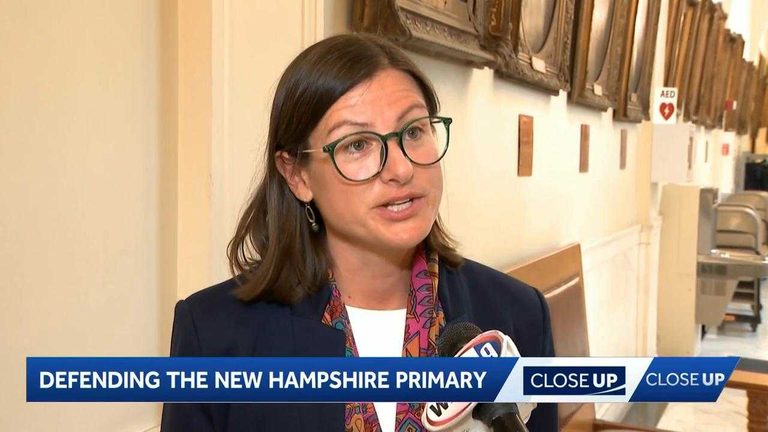
CONCORD, N.H. — As the race for New Hampshire Secretary of State heats up, all four candidates on the ballot are united in one message: the first‑in‑the‑nation presidential primary is a cornerstone of American democracy and must be defended.
Candidate positions
James Butler, a former state representative, said the primary’s early status gives New Hampshire voters a unique voice in selecting the nation’s leader. He pledged to work with the state legislature and the national party apparatus to block any federal or regional attempts to move the contest later in the calendar.
Carleigh Beriont, a veteran elections official, highlighted the constitutional principle of local control over elections. She promised to strengthen the Secretary of State’s office with additional staff and technology to ensure the primary runs smoothly and transparently, protecting both voters and candidates.
Patrick Long, a small‑business owner and former town councilor, framed the primary as a matter of family and community pride. He argued that keeping New Hampshire first preserves the tradition that allows ordinary citizens—not party elites—to weigh in early, reinforcing the nation’s commitment to individual liberty.
Incumbent David Scanlan underscored his record of administering clean, well‑run elections. He warned that recent proposals from other states and some members of Congress to shift the primary could erode the state’s historic role. Scanlan said he will continue to lobby Congress and the Democratic and Republican National Committees to safeguard New Hampshire’s position.
Why the primary matters
The New Hampshire primary has been a fixture of the presidential nomination process since the early 20th century. Supporters argue that its small‑scale, retail‑politics format forces candidates to engage directly with voters, fostering a more informed electorate. Critics, often from larger states, claim the early contest gives disproportionate influence to a handful of voters.
All four candidates agreed that the Constitution protects the right of states to manage their own elections, and that any attempt to relocate the primary would undermine that principle. They each pledged to use the powers of the Secretary of State’s office—such as certifying election dates, overseeing voter registration and ensuring compliance with state law—to keep the primary on the first Tuesday in March.
Looking ahead
The Secretary of State race will appear on the November 2026 ballot, alongside other statewide offices. Voters will have the chance to choose a candidate who not only administers elections but also champions New Hampshire’s historic role in the national political process.
Local civic groups, including the New Hampshire Association of Secretaries of State, have scheduled town‑hall meetings in Concord, Manchester and Nashua to give residents a chance to ask questions. The candidates plan to attend, emphasizing transparency and community involvement.
Regardless of who wins, the consensus among the hopefuls is clear: defending the first‑in‑the‑nation primary is a matter of preserving tradition, protecting individual liberty and ensuring that families across the Granite State continue to have a meaningful voice in choosing the nation’s leaders.
Original reporting: WMUR (Hearst) – local news — read the source article.